
Key Takeaways
- AI integration enhances existing systems without requiring full replacement.
- Legacy infrastructure and data quality remain key challenges.
- A clear strategy and expert guidance are critical for success.
- AI enables improved efficiency and more informed decision-making.
Introduction
Over 78% of enterprises are investing in AI, but most struggle with integration.
AI integration in existing systems is quickly becoming a priority for businesses that want to stay competitive. Companies are no longer asking if they should adopt AI; they are asking how to do it effectively without disrupting current operations.
From legacy software limitations to high implementation costs, the journey is filled with challenges. However, with the right strategy, businesses can unlock massive efficiency gains, automation, and smarter decision-making.
At MeisterIT Systems, we help organizations seamlessly integrate AI into their current infrastructure. In this guide, we break down the real challenges, costs, and practical solutions you need to know.
What is AI Integration in Existing Systems?
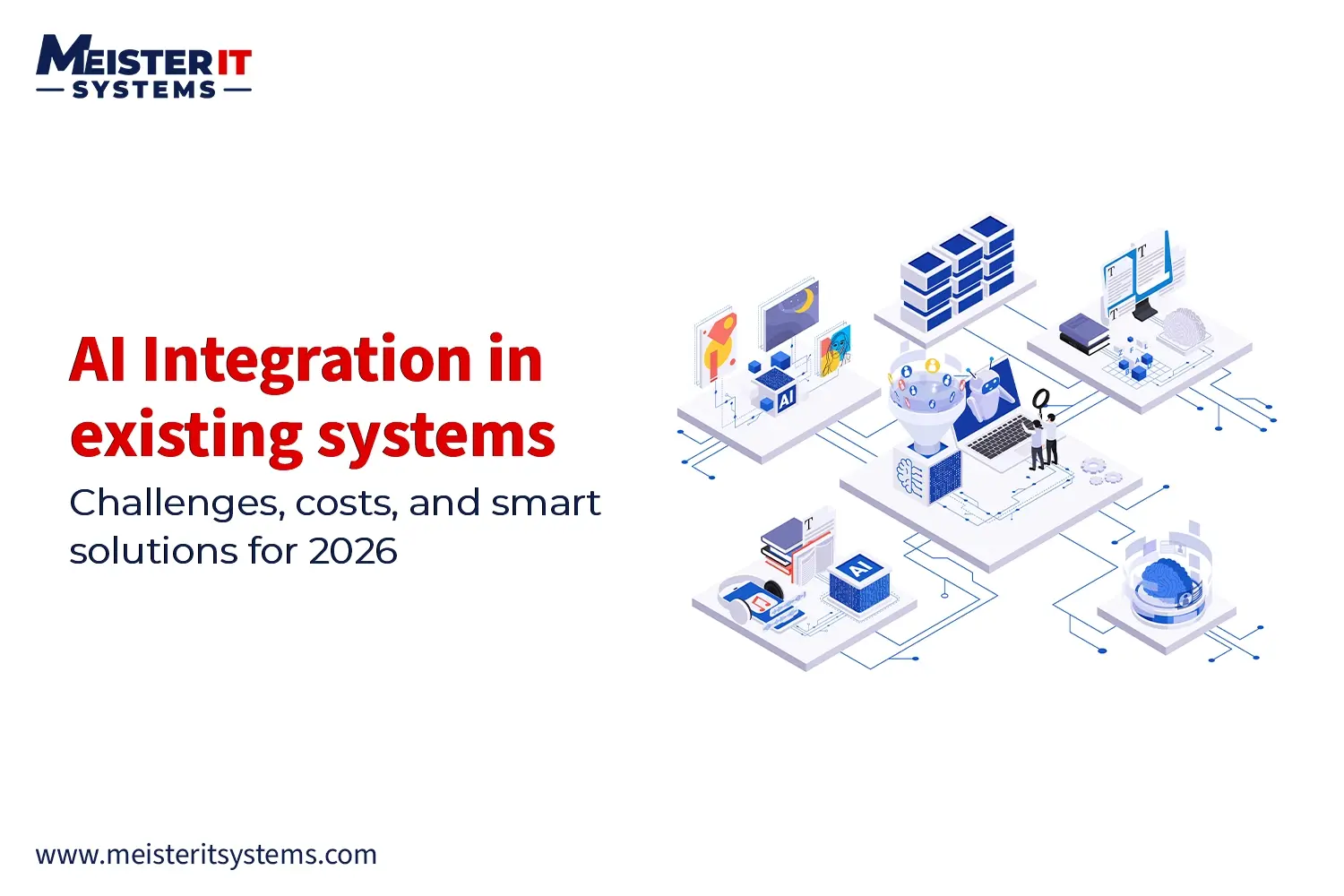
AI integration in existing systems involves embedding AI capabilities into software platforms such as CRMs, ERPs, mobile apps, and enterprise tools, without replacing them entirely.
Instead of rebuilding from scratch, businesses enhance their systems using AI technologies such as:
- Machine learning for predictive analytics
- Natural language processing for chatbots
- Computer vision for automation
- AI-powered recommendation engines
This approach reduces risk while enabling faster innovation.
Key Challenges in AI Integration in Existing Systems
AI adoption brings significant benefits, but it also introduces technical and operational complexities.
1. Legacy System Limitations
Many organizations still operate on outdated systems that were never designed to support AI.
Common issues include:
- Lack of API compatibility
- Poor scalability
- Rigid architectures
Why it matters: These limitations make it difficult for AI tools to communicate with existing systems, slowing down innovation.
2. Data Quality and Availability
AI systems rely heavily on data. Unfortunately, most businesses struggle with fragmented or low-quality datasets.
Challenges include:
- Data silos across departments
- Inconsistent formats
- Missing or outdated data
Why it matters: Poor data leads to inaccurate predictions and unreliable insights.
3. Integration Complexity
AI is not a plug-and-play solution. Integrating it into existing systems requires deep technical expertise.
Key issues:
- System compatibility challenges
- Middleware requirements
- Real-time processing limitations
Why it matters: Without proper integration, AI investments may fail to deliver value.
4. High Initial Cost
AI integration can require significant upfront investment.
Typical cost areas:
- Infrastructure upgrades
- AI model development
- Hiring skilled professionals
Why it matters: Budget constraints can delay or limit AI adoption.
5. Security and Compliance Risks
AI systems process sensitive business and customer data, raising security concerns.
Risks include:
- Data breaches
- Compliance violations
- Unauthorized access
Why it matters: Failing to meet regulations can result in financial and reputational damage.
6. Skill Gap in Workforce
AI requires specialized knowledge that many organizations lack.
Skill shortages include:
- Machine learning expertise
- Data engineering skills
- AI system management
Why it matters: Without the right talent, AI projects cannot scale effectively.
7. Resistance to Change
Employees may resist AI adoption due to fear of job displacement or unfamiliarity.
Why it matters: Resistance can slow implementation and reduce ROI.
Understanding the Costs of AI Integration
The cost of AI integration in existing systems varies depending on business size, complexity, and goals.
Estimated Cost Breakdown
| Cost Component | Estimated Range | Description |
|---|---|---|
| Infrastructure | $10,000 – $100,000+ | Cloud, servers, storage |
| Development | $20,000 – $200,000+ | AI model creation |
| Data Preparation | $5,000 – $50,000 | Data cleaning and structuring |
| Talent Hiring | $50,000 – $150,000/year | AI experts |
| Maintenance | $10,000+/year | Monitoring and updates |
Hidden Costs to Consider
- Downtime during system upgrades
- Employee training
- Third-party tools and subscriptions
Why it matters: Understanding total costs helps businesses avoid budget overruns and plan effectively.
Smart Solutions for AI Integration in Existing Systems
Despite the challenges, businesses can successfully integrate AI by following proven strategies.
1. Start with a Clear Strategy
Define your goals before implementing AI.
- Identify specific use cases
- Set measurable KPIs
- Align AI initiatives with business objectives
Why it matters: A clear roadmap ensures efficient use of resources.
2. Adopt API-First Architecture
Modern APIs enable smooth communication between AI tools and legacy systems.
Benefits:
- Faster integration
- Improved scalability
- Reduced complexity
3. Invest in Data Management
High-quality data is essential for AI success.
Steps include:
- Centralizing data sources
- Cleaning and validating data
- Standardizing formats
4. Leverage Cloud-Based AI Solutions
Cloud platforms reduce infrastructure costs and improve scalability.
Popular platforms include:
- AWS AI
- Google Cloud AI
- Microsoft Azure AI
Learn more about AI solutions here: Artificial Intelligence (AI) Services and Solutions
5. Partner with AI Experts
Working with experienced professionals simplifies integration.
At MeisterIT Systems, we provide:
- Custom AI integration strategies
- Legacy system modernization
- End-to-end deployment
6. Implement AI Gradually
Start small and expand over time.
- Run pilot projects
- Measure performance
- Scale successful implementations
7. Focus on Security and Compliance
Ensure your AI systems meet regulatory standards.
- Use encryption
- Implement access controls
- Follow data protection laws
Benefits of AI Integration in Existing Systems
When implemented correctly, AI delivers measurable business value:
- Increased operational efficiency
- Improved customer experiences
- Faster decision-making
- Long-term cost savings
- Scalable processes
Real-World Use Cases
AI integration is transforming industries worldwide.
Examples include:
- E-commerce: Personalized recommendations
- Healthcare: Predictive diagnostics
- Finance: Fraud detection
- Manufacturing: Predictive maintenance
How MeisterIT Systems Helps You Integrate AI
At MeisterIT Systems, we specialize in seamless AI integration for modern businesses.
Our approach include
- Assessing your current systems
- Designing tailored AI strategies
- Developing scalable solutions
- Ensuring smooth deployment
- Providing ongoing support
We focus on delivering real results, not just technology.
Conclusion
AI integration in existing systems is a critical step toward digital transformation. While challenges like legacy infrastructure, high costs, and skill gaps exist, they are manageable with the right strategy.
By focusing on data quality, scalable technology, and expert guidance, businesses can unlock the full potential of AI.
At MeisterIT Systems, we help organizations modernize their systems and successfully adopt AI-driven solutions.
Ready to transform your business with AI?
FAQs on AI Integration in Existing Systems
Q1: How long does AI integration take?
A1: Most projects take between 3 to 12 months depending on complexity.
Q2:Most projects take between 3 to 12 months depending on complexity.
A2: Initial costs can be high, but long-term ROI often justifies the investment.
Q3: Can legacy systems support AI?
A3: Yes, with APIs and middleware, most legacy systems can be upgraded.
Q4: Do I need to replace my current system?
A4: No, AI can enhance existing systems without full replacement.
Q5: Which industries benefit the most?
A5: Healthcare, finance, retail, manufacturing, and logistics see major benefits.
Q6: How do I start AI integration?
A6: Begin with a clear use case, evaluate your data, and consult experts.