
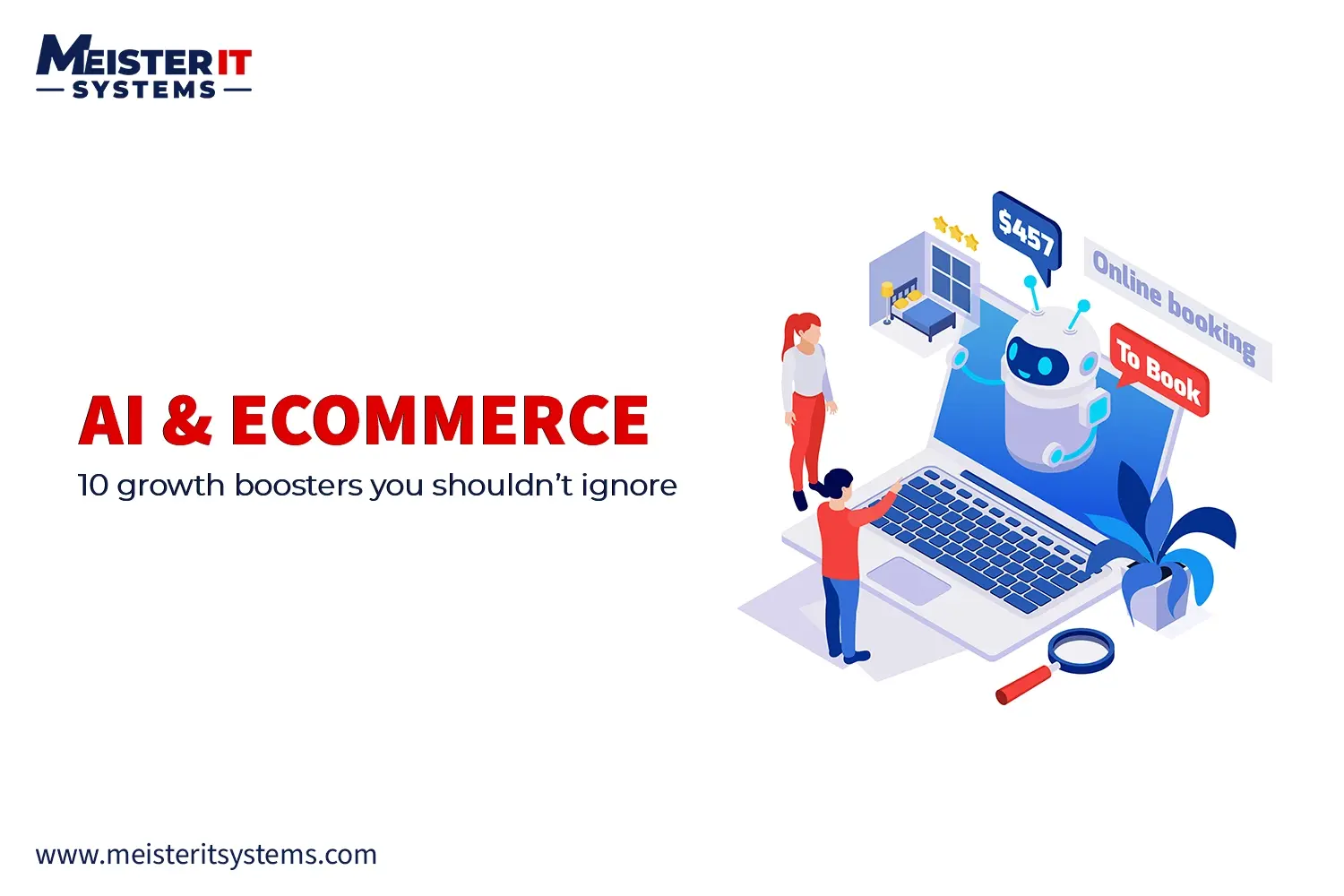
AI is transforming how eCommerce brands grow, engage, and compete. Across the US, UK, and Europe, online retailers are using AI to predict demand, automate marketing, and deliver hyper-personalized shopping experiences.
From Amazon’s recommendation engine to Zara’s smart inventory system, AI is helping businesses cut costs, boost conversions, and scale faster than ever. As global eCommerce passes $6.3 trillion in 2025, AI has become the edge that separates fast-growing brands from the rest.
Here are 10 proven ways AI is helping eCommerce businesses scale with real-world examples.
1. Predictive Analytics: Smarter Planning and Forecasting
Predictive analytics allows eCommerce companies to see ahead instead of reacting late. By analyzing historical data, customer behavior, seasonality, and even weather patterns, AI helps predict demand before it happens.
Example:
- Walmart (US) uses predictive models to forecast buying trends across regions, allowing for more accurate stock distribution.
- Tesco (UK) relies on AI forecasting to anticipate shifts in grocery demand, helping it manage supply chain efficiency.
Deeper Impact:
- Forecasting not only prevents stockouts and overstocking, but also improves cash flow by optimizing how much inventory is held.
- Marketing teams can plan campaigns around predicted demand spikes.
- AI helps identify which products are seasonal, trending, or declining.
This kind of foresight allows leadership teams to plan budgets, logistics, and resources with confidence.
2. Personalized Shopping Experiences
Personalization powered by AI turns static online stores into adaptive experiences. Every click, search, and purchase feeds algorithms that tailor product recommendations, emails, and even on-site visuals to each user.
Example:
- Amazon uses deep learning models to create unique homepages for every customer, showing them products based on purchase history and preferences.
- ASOS (UK) tracks browsing behavior and fashion trends to suggest items that match personal style profiles.
Deeper Impact:
- Personalization increases average order value by up to 20%.
- It reduces decision fatigue by guiding customers toward relevant products.
- Personalized post-purchase recommendations increase repeat sales.
- Customers now expect this kind of personalization as standard. Brands that fail to deliver risk losing engagement to those that do.
3. AI Chatbots and Virtual Assistants
AI chatbots are transforming customer support. They are faster, multilingual, and available all day, which improves customer satisfaction while reducing operational costs.
Example:
- H&M’s chatbot acts as a virtual stylist, suggesting outfits based on users’ preferences.
- Sephora’s AI assistant on Facebook Messenger helps customers find makeup products suited to their skin tone.
Deeper Impact:
- Chatbots reduce response times from hours to seconds.
- They handle FAQs, order tracking, and refund inquiries instantly.
- Advanced chatbots can detect customer sentiment, offering empathy or escalation when needed.
Chatbots are no longer just a support tool. They also serve as digital sales assistants, guiding users through the buying process.
4. Dynamic Pricing and Real-Time Market Optimization
In a competitive eCommerce environment, pricing can make or break conversions. AI-powered pricing algorithms monitor competitor prices, demand trends, and inventory levels to adjust prices automatically in real time.
Example:
- Amazon uses AI-based pricing engines that can adjust millions of product prices daily.
- British Airways applies dynamic pricing to optimize ticket sales depending on demand and route popularity.
Deeper Impact:
- Retailers can maintain healthy margins during low-demand periods.
- Prices can increase strategically during peak times without losing competitiveness.
- AI ensures fair pricing for different regions, currencies, and seasons.
This flexibility enables global eCommerce businesses to react instantly to changing market dynamics.
5. Visual Search and Image Recognition
Visual search has changed how customers discover products. Instead of typing long queries, shoppers can upload a photo and instantly find similar products available in-store.
Example:
- Pinterest Lens allows users to snap or upload an image to find visually similar items.
- Wayfair (US) uses visual AI to help customers find furniture based on shape, color, or texture.
Deeper Impact:
- Converts inspiration into purchase faster.
- Enables “shop the look” features across social media platforms.
- Improves accessibility for users who prefer visual search over text-based search.
In a world driven by visual content, especially among Gen Z users, this technology makes product discovery intuitive and engaging.
6. AI-Powered Supply Chain and Logistics Optimization
Behind every efficient eCommerce company is a smart supply chain. AI manages sourcing, demand forecasting, warehouse operations, and delivery routes with precision.
Example:
- Zara uses AI to monitor stock in real time across stores and automatically reorder top-selling items.
- Ocado (UK) operates AI-driven robotic warehouses that improve picking speed and reduce human error.
Deeper Impact:
- Route optimization reduces delivery time and fuel costs.
- AI minimizes excess inventory and wastage.
- Predictive systems identify delays early and reroute shipments automatically.
This level of automation ensures customers get their orders faster, while businesses save costs and resources.
7. AI-Driven Marketing Automation
Marketing teams no longer have to guess what will work. AI tools analyze audience data, automate content delivery, and optimize ad spending in real time.
Example:
- Modern eCommerce brands on Shopify now rely on AI tools like Klaviyo, HubSpot, and Meta’s Advantage+ to automate email campaigns, ad targeting, and customer segmentation.
- Coca-Cola (US) uses its own in-house AI systems along with enterprise tools from partners like Adobe and Salesforce to analyze customer conversations, optimize ad creatives, and launch real-time marketing campaigns globally
Deeper Impact:
- Predictive targeting helps reach users more likely to convert.
- AI tests hundreds of ad variations to find the most effective copy and visuals.
- Marketing teams can focus on creative strategy while automation handles execution.
AI-powered marketing improves both speed and precision, ensuring every dollar spent brings measurable returns.
8. Fraud Detection and Secure Transactions
As online transactions increase, so does the risk of fraud. AI helps identify suspicious behavior patterns before they turn into financial losses.
Example:
- PayPal relies on AI to detect irregularities in millions of transactions daily.
- Stripe Radar uses machine learning to analyze billions of global transactions and block high-risk activity.
Deeper Impact:
- AI systems adapt to new fraud patterns faster than traditional rules-based systems.
- Real-time monitoring prevents false positives and unnecessary declines.
- Secure transactions increase user confidence, leading to higher repeat purchases.
Fraud prevention powered by AI is now a competitive advantage, not just a safeguard.
9. Predicting and Preventing Customer Churn
Keeping customers is often harder than acquiring them. AI tracks engagement patterns, predicts which users might stop purchasing, and triggers retention actions automatically.
Example:
- Shopify’s RetentionX tool segments customers by churn risk and suggests retention campaigns.
- Starbucks uses its proprietary AI platform Deep Brew to predict churn, personalize rewards, optimize offers, and re-engage inactive users through its mobile app.
Deeper Impact:
- Customer lifetime value increases when churn is managed proactively.
- AI helps build loyalty programs based on behavior instead of assumptions.
- Predictive alerts allow marketing teams to act before users leave.
Churn prediction ensures businesses keep growing without constantly overspending on new customer acquisition.
10. Voice Search and Conversational Commerce
Voice shopping is becoming mainstream as smart speakers and mobile assistants become part of daily life. AI-driven voice interfaces are changing how people search and buy products online.
Example:
- Walmart (US)integrates voice ordering through Google Assistant, allowing customers to add items hands-free.
- Domino’s Pizza (UK) uses Alexa for reorders, increasing repeat sales from loyal customers.
Deeper Impact:
- Voice commerce simplifies reordering for routine purchases.
- Optimizing for voice search improves visibility in AI-based search engines.
- Voice interactions enhance accessibility for a wider range of users.
Adapting eCommerce stores for voice and conversational commerce ensures long-term relevance in a market moving toward AI-powered search.
The Future of eCommerce Growth Is Intelligent
AI is now central to eCommerce success. It empowers retailers to understand customers deeply, make informed decisions instantly, and scale globally without compromising efficiency.
The companies that embrace AI today are not just keeping up; they are setting the standards for what comes next.
Ready to Scale with AI?
At MeisterIT Systems, we help eCommerce companies in the US, UK, and beyond integrate AI into every part of their business. Whether you want smarter marketing, personalized shopping, or predictive insights, our AI integration services help you grow faster and more efficiently.
Let’s build your AI-powered eCommerce future.
Contact our experts today!
FAQs on AI in eCommerce Scaling
Q1: How is AI used in eCommerce today?
A1: AI is used to personalize shopping experiences, predict demand, automate marketing, optimize pricing, detect fraud, and improve logistics. It helps online stores operate more efficiently and scale faster.
Q2: Why is AI important for eCommerce growth?
A2: AI turns customer and sales data into insights that improve decision-making. It allows brands to predict trends, personalize experiences, and increase conversions while reducing manual effort.
Q3: Can small eCommerce businesses use AI?
A3: Yes. Smaller retailers can use affordable AI tools for chatbots, targeted ads, automated emails, and smart pricing. Platforms like Shopify, WooCommerce, and Wix already include built-in AI features.
Q4: What are the best AI tools for eCommerce?
A4: Popular tools include Shopify Magic, Klaviyo, ChatGPT integrations, Google Cloud AI, and Adobe Sensei. These platforms help with automation, analytics, personalization, and customer engagement.
Q5: How does AI help reduce cart abandonment?
A5: AI tracks browsing behavior and sends timely reminders, discounts, or chat prompts to bring customers back to checkout. It helps recover lost sales and improve conversion rates.