
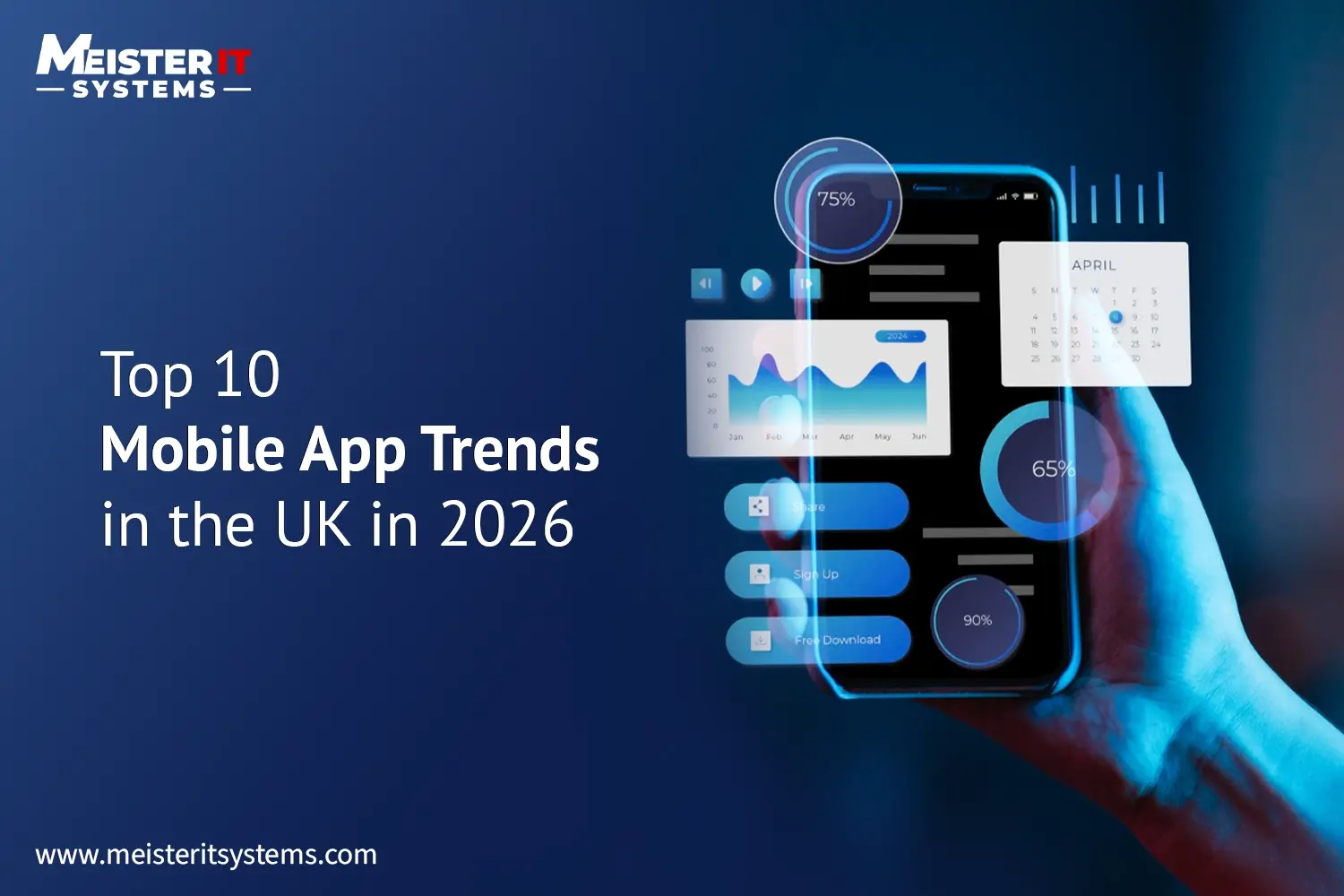
In 2026, mobile apps are shifting from basic customer tools to intelligent platforms that drive business outcomes. UK companies are investing in AI tools that automate tasks, privacy-focused designs to build trust, and new computing experiences that change user interaction.
Customers now expect apps to be faster, smarter, and more secure, not just functional. For CTOs and product leaders, staying ahead means understanding which technologies will shape the next generation of digital products.
In this blog, we explore the 10 most important mobile app trends in the UK for 2026 and what they mean for businesses building future-ready applications.
Mobile App Demand in the UK
Mobile app usage continues to surge globally, with downloads crossing hundreds of billions each year. The app economy is expected to generate over $613 billion in revenue, reflecting massive demand across industries including retail, finance, healthcare, logistics, and entertainment.
In the UK, businesses are investing heavily in mobile-first strategies as consumers increasingly expect seamless, fast, and personalised digital experiences. In 2026, mobile apps are not just tools, they are core business infrastructure.
Top 10 Mobile App Trends in the UK in 2026
As UK companies deepen their digital transformation, mobile apps are becoming essential for customer engagement, operational efficiency, and competitive differentiation.
With the rapid growth of AI, immersive technology, secure digital payments, and connected devices, the UK mobile app ecosystem in 2026 is set to expand even further.
Here are the top 10 mobile app trends in the UK for 2026:
1. AI and Machine Learning Integration
Artificial intelligence is no longer optional in mobile apps. In 2026, AI-powered applications are becoming smarter, more predictive, and more personalised than ever before.
Global AI investment continues rising, with industries like banking, retail, and healthcare leading adoption. UK businesses are increasingly embedding AI features such as recommendation engines, predictive analytics, intelligent automation, and conversational interfaces.
Mobile apps now learn user behaviour to deliver tailored experiences, from shopping recommendations to real-time customer support. Apps like Amazon and Myntra remain strong examples of AI-driven engagement.
Benefits
- Improves user retention through personalised experiences
- Boosts revenue with targeted product suggestions
- Enhances support through AI chatbots and assistants
2. Spatial Computing and Next-Gen Immersive Apps
Spatial computing is emerging as one of the most forward-looking mobile app trends in 2026, driven by the growth of advanced AR devices and immersive digital environments.
Unlike traditional AR, spatial computing blends digital objects into the real world in a more realistic, interactive way. UK businesses are beginning to explore spatial experiences for retail, training, architecture, tourism, and healthcare.
For example, instead of viewing a product in AR on a screen, users can interact with full spatial environments where digital content feels physically present.
As Apple Vision Pro-style ecosystems influence app development globally, spatial-first mobile experiences are expected to expand rapidly in the UK market.
Benefits
- Creates deeper immersion than standard AR/VR
- Enables interactive training, shopping, and simulations
- Positions brands as innovators in next-gen experiences
3. Wearable Technology Integration
Wearables are growing rapidly in the UK, with smartwatches, fitness trackers, and health-monitoring devices becoming everyday tools.
By 2026, mobile apps are expected to integrate even more deeply with wearable ecosystems, offering real-time insights, biometric tracking, and personalised wellness features.
Apps like Fitbuddy continue leading this trend through seamless device synchronisation and health analytics.
Benefits
- Provides personalised health and fitness insights
- Enables real-time monitoring and tracking
- Improves engagement across connected devices
4. Blockchain for Security and Payments
Blockchain adoption is expanding beyond cryptocurrency. In 2026, blockchain is becoming a key driver of secure payments, fraud prevention, decentralised identity, and transparent data sharing.
UK fintech apps are increasingly incorporating blockchain for secure digital transactions and trust-building financial experiences.
Apps like Revolut and Monzo, along with emerging fintech platforms, are leveraging blockchain for faster, safer payments and loyalty systems.
Benefits
- Reduces fraud and strengthens security
- Enables secure, decentralised payment solutions
- Builds trust through transparent transaction records
5. No-Code and Low-Code App Development
Low-code and no-code development platforms are transforming how businesses build apps in 2026.
With more non-technical teams adopting these tools, organisations in the UK are accelerating app development cycles, reducing costs, and improving innovation speed.
Platforms like Bubble and Appy Pie allow businesses to launch functional apps quickly without deep coding expertise.
Benefits
- Reduces fraud and strengthens security
- Enables secure, decentralised payment solutions
- Builds trust through transparent transaction records
6. Voice Technology and Virtual Assistants
Voice-enabled apps are becoming more advanced in 2026, driven by improvements in speech recognition and conversational AI.
UK users increasingly expect hands-free interactions, whether for shopping, navigation, accessibility, or smart home control.
Integrations with Amazon Alexa, Siri, and Google Assistant are helping apps deliver smoother, voice-first experiences.
Benefits
- Improves accessibility through hands-free use
- Creates more natural user engagement
- Enhances convenience across everyday tasks
7. AI Agents and Autonomous App Experiences
In 2026, mobile apps are moving beyond basic AI features like chatbots and recommendations. The next shift is toward AI agents, apps that don’t just respond, but actually take action on behalf of users.
AI agents can plan tasks, automate workflows, handle multi-step requests, and make decisions in real time. This trend is especially growing in the UK across industries like fintech, healthcare, eCommerce, and enterprise productivity.
For example, instead of a user manually booking appointments, tracking orders, or managing support tickets, AI agents can complete these processes automatically with minimal input.
AI-powered agent apps are becoming a competitive advantage for businesses looking to reduce friction and deliver smarter experiences.
Benefits
- Automates complex user journeys with minimal effort
- Improves productivity through intelligent task execution
- Enhances customer support with proactive AI assistance
8. Mobile Banking and Fintech Innovation
Mobile banking adoption is rising rapidly, with most users preferring app-based financial services over traditional branch banking.
By 2026, mobile banking apps are becoming more intelligent with real-time fraud detection, AI-based spending insights, and faster payment rails.
Apps like Starling Bank, Revolut, and Capital One Mobile are leading this shift.
Benefits
- Instant access to financial services anytime
- Lower fees and faster transfers
- Enhanced security with real-time alerts
9. Privacy-First Mobile Apps and Regulation-Ready UX
With stricter data regulations and rising consumer awareness, privacy-first app development is becoming essential in the UK in 2026.
Users now expect transparency, secure data handling, and greater control over personal information. UK businesses are increasingly adopting privacy-by-design practices, focusing on minimal data collection, encrypted storage, and user-consent-driven experiences.
This trend is especially important in sectors like healthcare, fintech, education, and any app handling sensitive customer data.
Privacy-first apps not only reduce compliance risks but also build stronger trust and long-term loyalty.
Benefits
- Strengthens user trust through transparent data practices
- Supports compliance with UK and GDPR regulations
- Reduces security risks with privacy-focused architecture
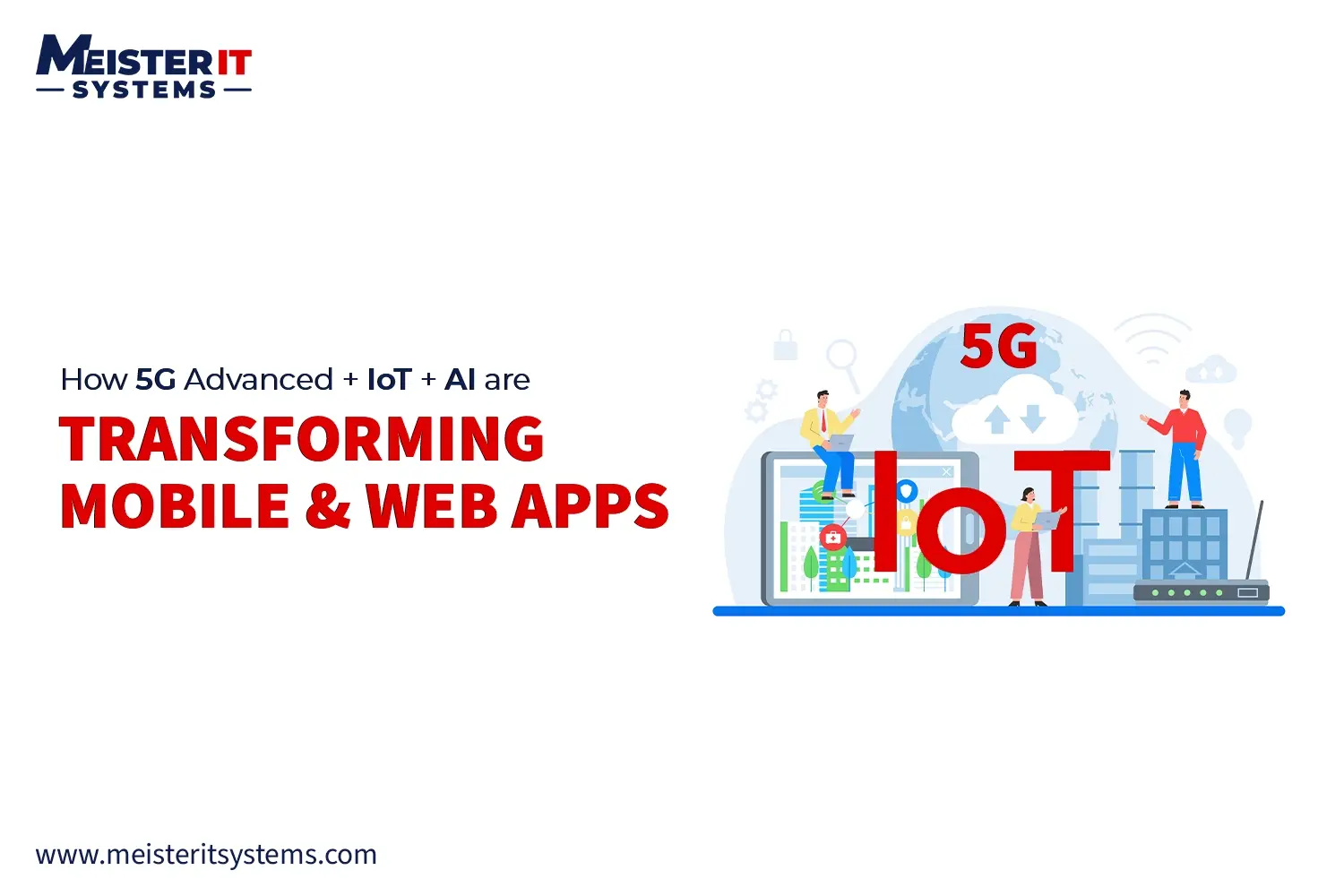
10. Internet of Things (IoT) Connected Apps
IoT continues expanding across smart homes, automotive systems, healthcare devices, and smart city infrastructure.
By 2026, mobile apps are becoming the central control hubs for connected environments.
Key growth areas include:
- Smart home automation
- Automotive IoT systems
- Smart city infrastructure
Apps like Blynk allow users to manage devices remotely and automate workflows, making IoT apps a major UK trend.
Benefits
- Enhances automation and efficiency
- Enables smarter device ecosystems
- Supports personalised connected experiences
How MeisterIT Systems Can Help You Build a Future-Ready Mobile App in 2026
At MeisterIT Systems, we help businesses stay ahead in the fast-changing world of mobile app development. Our expert team builds scalable, secure, and modern mobile applications aligned with the latest UK app trends.
From AI-powered mobile solutions and wearable integrations to blockchain security and immersive AR experiences, we develop apps that are designed for growth in 2026 and beyond.
Whether you want to build an on-demand platform, a fintech app, or an IoT-connected product ecosystem, we can help turn your vision into a high-performing mobile solution.
Conclusion
The UK mobile app landscape is evolving rapidly in 2026. Trends like AI, AR/VR, blockchain, touchless UI, and IoT are pushing mobile experiences into a smarter and more connected future.
Businesses that adopt these innovations early will gain a strong competitive edge by delivering more secure, personalised, and engaging user experiences.
Partnering with MeisterIT Systems ensures your mobile app is not only aligned with 2026 trends but also built to meet future demands with confidence.
Frequently Asked Questions (FAQ)
Q1: What are the top mobile app trends in the UK for 2026?
A1: AI, AR/VR, wearables, blockchain, low-code/no-code, voice assistants, AI agents, fintech innovation, privacy-first apps, and IoT-connected apps are leading. These trends drive smarter, faster, and secure mobile experiences.
Q2: How is AI changing mobile apps?
A2: AI powers personalised recommendations, predictive insights, and task automation. UK apps use it to boost engagement, efficiency, and revenue.
Q3: Why is spatial computing important?
A3: It merges digital objects with the real world for interactive, immersive experiences. UK businesses use it in retail, training, healthcare, and tourism.
Q4: Are low-code/no-code platforms viable for enterprises?
A4: Yes. They speed up development, reduce costs, and let non-technical teams build apps quickly.
Q5: How do privacy regulations impact UK apps?
A5: Strict rules like GDPR require secure data handling and clear user consent. Apps must prioritize privacy to build trust and stay compliant.