
Key Takeaways
- GitHub Agent HQ now supports Anthropic Claude and OpenAI Codex
- AI agents can operate directly inside GitHub and VS Code
- Teams can use different AI models for different development tasks
- AI is shifting from assistance to collaboration
- Effective workflow design is now a competitive advantage
Introduction
GitHub has taken a decisive step toward AI-first software development. By adding Anthropic Claude and OpenAI Codex to Agent HQ, GitHub now enables teams to run multiple AI agents directly inside their development workflows.
This update moves AI beyond isolated assistants and into the core of software delivery. AI agents can now operate inside GitHub repositories, issues, pull requests, and Visual Studio Code, working alongside developers as part of the same system.
For CTOs and senior engineers, this signals a clear shift in how modern software teams are expected to build, review, and ship code.
What Is GitHub Agent HQ?
GitHub Agent HQ is GitHub’s centralized environment for working with AI agents. Instead of AI being limited to autocomplete or chat prompts, Agent HQ allows AI to participate in the same workflows as human contributors.
With Agent HQ, teams can:
- Assign issues to AI agents
- Ask agents to generate draft pull requests
- Use AI to review, refactor, or explain code
- Track AI-generated changes inside GitHub
- Collaborate with AI from GitHub.com, GitHub Mobile, and VS Code
The core idea is simple: AI should work where developers already work, without breaking context or workflow.
Which AI Models Are Now Available?
GitHub Agent HQ now supports multiple AI models, each with distinct strengths. This gives teams more control over how AI is used in development.
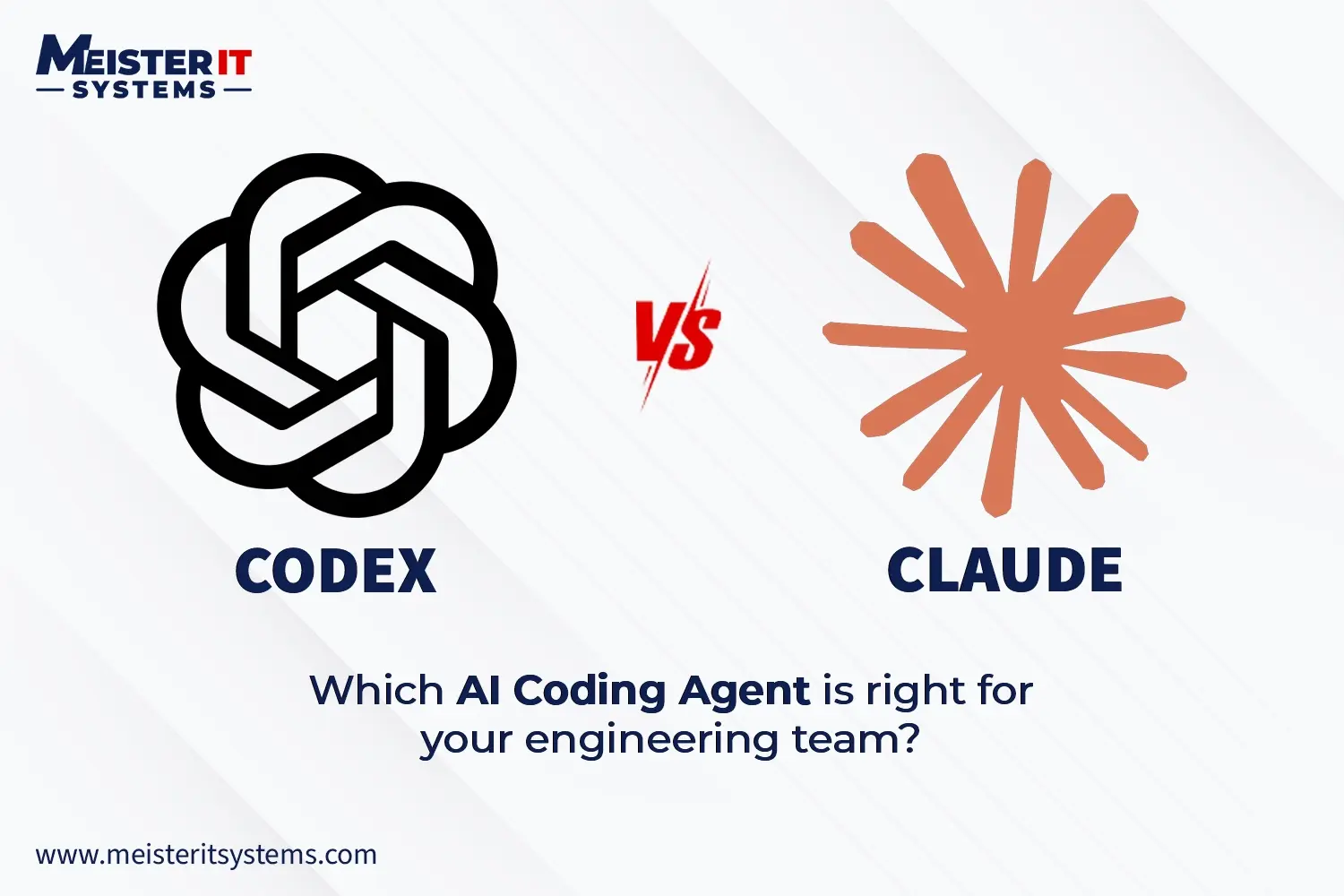
1. Anthropic Claude
Claude is designed for reasoning-heavy tasks. Inside Agent HQ, it is particularly useful for:
- Understanding large or unfamiliar codebases
- Assisting with architectural decisions
- Refactoring complex or legacy systems
- Explaining logic, constraints, and edge cases
Claude behaves more like a senior engineer focused on clarity and correctness.
2. OpenAI Codex
Codex is optimized for instruction-based coding. It is well-suited for:
- Generating feature implementations
- Writing boilerplate and scaffolding
- Translating requirements into working code
- Handling repetitive development tasks
Codex focuses on speed and execution, making it effective for well-defined tasks.
3. GitHub Copilot
GitHub Copilot continues to provide inline code suggestions and context-aware completions, helping developers write code faster inside their editor.
The key change is not Copilot itself, but the ability to choose the right AI model for the right job.
Why This Update Matters
This is not just a model expansion. It represents a change in how AI fits into software engineering.
1. AI Becomes Part of the Workflow
With Agent HQ, AI output is no longer hidden in private chats. Code, comments, and pull requests generated by AI live inside GitHub, where they can be reviewed, discussed, and improved.
This makes AI usage visible, auditable, and team-driven.
2. Reduced Context Switching
Developers no longer need to jump between external AI tools and their repositories. AI agents run directly inside GitHub and VS Code, reducing friction and improving focus.
3. Standardized AI Usage Across Teams
Instead of each developer using AI differently, engineering leaders can define how and where AI agents are used. This brings consistency to quality, security, and productivity.
Availability and Access Requirements
At launch:
- Support for Claude and Codex in Agent HQ is available in public preview
- Access requires GitHub Copilot Pro+ or GitHub Copilot Enterprise
- Usage is measured through premium requests, which introduce cost and quota considerations
For teams, this makes governance and usage policies important from day one.
What This Means for Developers
For developers, Agent HQ changes how daily work is done:
- Faster prototyping and implementation
- Easier onboarding into large or unfamiliar codebases
- Less time spent on repetitive tasks
- More time spent reviewing, refining, and making decisions
As AI takes on more execution work, developers shift toward higher-value responsibilities.
What This Means for CTOs and Engineering Leaders
For CTOs and engineering managers, the implications are broader.
1. Workflow Design Matters More Than Tools
Enabling AI agents alone is not enough. Teams need to decide:
- Which tasks are suitable for AI
- Which models are allowed for which workflows
- How AI output is reviewed and approved
- How costs and usage are monitored
Teams that design AI into their development systems will see better results than teams that rely on ad-hoc usage.
2. AI Governance Becomes Essential
With AI contributing directly to production code, governance around security, compliance, and quality becomes critical. Agent HQ makes AI visible, but leadership must decide how it is controlled.
Practical Use Cases for Teams
Common ways teams are beginning to use Agent HQ include:
- Assigning backlog items to Codex for draft implementations
- Using Claude to reason through refactors or architecture changes
- Generating initial pull requests that engineers review and finalize
- Helping new developers understand complex systems faster
These workflows are already shaping how modern engineering teams operate.
Final Thoughts
GitHub’s move to add Anthropic Claude and OpenAI Codex to Agent HQ makes one thing clear: AI is no longer an add-on for developers. It is becoming part of the software delivery system itself.
Teams that simply enable AI tools will see limited gains. Teams that design AI into their engineering workflows will move faster, ship with more confidence, and scale more effectively. The difference is not the tools. It is the strategy behind them.
At MeisterIT Systems, we help CTOs and product teams move beyond experimentation. We work with engineering leaders to integrate AI into real-world development workflows, from GitHub and CI pipelines to custom platforms, internal tools, and enterprise systems.
Contact us today to turn AI adoption into a long-term engineering advantage, not just another tool in the stack.
Frequently Asked Questions (FAQ)
Q1: What is GitHub Agent HQ used for?
A1: GitHub Agent HQ is used to run AI agents directly inside GitHub workflows. It allows AI to create pull requests, review code, explain logic, and work on issues alongside developers in repositories and editors.
Q2: How is GitHub Agent HQ different from GitHub Copilot?
A2: GitHub Copilot focuses on inline code suggestions. Agent HQ enables full AI agents that can reason about tasks, generate pull requests, review changes, and collaborate within GitHub and Visual Studio Code.
Q3: What is the difference between Anthropic Claude and OpenAI Codex in Agent HQ?
A3: Anthropic Claude is better for reasoning, architecture decisions, and understanding large codebases. OpenAI Codex is optimized for fast code generation, feature implementation, and repetitive development tasks.
Q4: Can AI agents in GitHub Agent HQ push code automatically?
A4: No. AI agents can draft code and open pull requests, but human review and approval are still required. All changes follow standard GitHub review and merge processes.
Q5: Who should use GitHub Agent HQ, and why does it matter?
A5: GitHub Agent HQ is designed for development teams, senior engineers, and CTOs. It matters because it turns AI into a shared, governed part of the engineering workflow instead of an individual productivity tool.