
Key Takeaways
- AI agent security requires clear boundaries between autonomous actions and those requiring human approval.
- Least-privilege access helps prevent AI agents from gaining unnecessary system permissions.
- Approval requirements should reflect the risk and potential impact of each AI agent action.
- Comprehensive audit trails make AI agent activities traceable and accountable.
- MeisterIT Systems helps businesses build secure AI agents with controlled permissions, approval workflows, and strong governance.
Introduction
AI agents now go far beyond simple chat responses. They can access APIs, modify databases, deploy code, and interact with core business systems. This creates a new security challenge where the real risk is not what they say, but what actions they are allowed to execute.
Unlike reversible chatbot errors, autonomous agents with excessive permissions can cause serious damage. That is why AI agent security and AI agent access control must define strict boundaries between automated actions and those requiring human approval and oversight.
This article explores how organisations can secure autonomous AI systems through controlled permissions, approval workflows, and governance. If you are a CTO wondering how to safely scale AI agents across your infrastructure without risking data, systems, or compliance, read this now.
From Copilots to Autonomous Agents: The New Risk Surface
Traditional AI copilots naturally kept humans involved. The AI generated a response or recommendation, and a person decided what happened next.
Autonomous AI agents change this model.
They can receive an objective, divide it into tasks, select tools, call APIs, analyse results, and continue executing without constant human intervention.
This autonomy improves efficiency, but without appropriate AI agent security and governance, it can expose organisations to several risks:
- Prompt injection: Malicious instructions influence agent behaviour.
- Excessive agency: Agents receive more permissions than their tasks require.
- Cascading failures: One incorrect action leads to additional unintended actions.
- Privilege misuse: Agents perform actions beyond their intended authority.
- Data exfiltration: Sensitive information reaches unauthorised systems.
The answer is not removing autonomy. It is controlling where autonomy ends.
When Should an AI Agent Require Human Approval?
Not every AI agent action needs manual approval.
Reading approved documentation, analysing non-sensitive logs, generating drafts, or preparing reports can often run autonomously.
Human approval becomes important when an action is:
- Irreversible, such as deleting production data
- Financially consequential, such as transferring funds
- Externally visible, such as contacting customers
- Privilege-changing, such as modifying IAM permissions
- Legally significant, such as approving an agreement
- High blast radius, where one mistake could affect multiple users or systems
A risk-based AI agent approval workflow allows businesses to automate routine operations while maintaining control over high-impact decisions.
5 AI Agent Actions That Should Require Human Approval
The exact level of oversight will depend on the organisation, system, and risk involved. However, the following five categories deserve strong approval controls.
1. Production Infrastructure Changes
AI agents can analyse logs, identify anomalies, and recommend infrastructure fixes. But modifying production systems introduces significantly greater risk.
Human approval should generally be required before:
- Deleting cloud resources or databases
- Changing firewall or security group rules
- Modifying IAM roles or policies
- Running production database migrations
- Changing critical production configurations
Instead of immediately executing the action, the agent can prepare the proposed change and send it to an authorised engineer.
This keeps AI-assisted operations fast while preventing an incorrect decision from directly affecting production availability or security.
2. Financial Transactions and Budget Changes
AI agents can analyse expenditure, forecast costs, identify unusual transactions, and recommend budget adjustments.
Executing those decisions requires stronger controls.
Approval should be required for actions such as:
- Initiating payments or vendor payouts
- Increasing cloud or advertising budgets
- Issuing high-value refunds
- Changing billing credentials
- Modifying payment gateway settings
An agent may correctly identify that additional cloud resources are needed during a traffic spike. That does not mean it should have unrestricted authority to increase spending.
The AI can recommend the action while an authorised person makes the final decision.
3. Customer Data and External Communications
Customer-facing agents often interact with CRM platforms, support systems, customer records, and communication tools.
Low-risk actions, such as summarising a support history, may run automatically. Actions affecting sensitive information or external communication require tighter AI agent access control.
These include:
- Deleting or exporting customer records
- Changing user permissions
- Modifying authentication settings
- Sending bulk emails or SMS messages
- Publishing through official social accounts
A single incorrect action could affect thousands of customers.
Human approval gates provide additional protection for customer privacy, compliance, and brand reputation.
4. Code Merges and Production Deployments
AI coding agents can generate code, fix bugs, write tests, and prepare pull requests.
But generating code is very different from deploying it.
Human approval should remain part of actions such as:
- Merging code into protected branches
- Changing CI/CD configurations
- Bypassing automated tests
- Deploying production hotfixes
- Modifying API credentials or secrets
AI-generated code can still introduce security vulnerabilities, incompatible dependencies, or subtle logic errors.
Automated testing combined with developer review creates a safer path from AI-generated code to production.
5. High-Privilege Third-Party Integrations
AI agents often connect multiple applications to complete business workflows.
An agent might interact with a CRM, ERP, cloud environment, HR platform, or communication system during a single task.
Human approval should be considered before:
- Granting new OAuth scopes
- Changing API permissions
- Performing sensitive write operations
- Sending confidential information to external systems
- Triggering high-impact external webhooks
Every integration expands the agent’s operational reach.
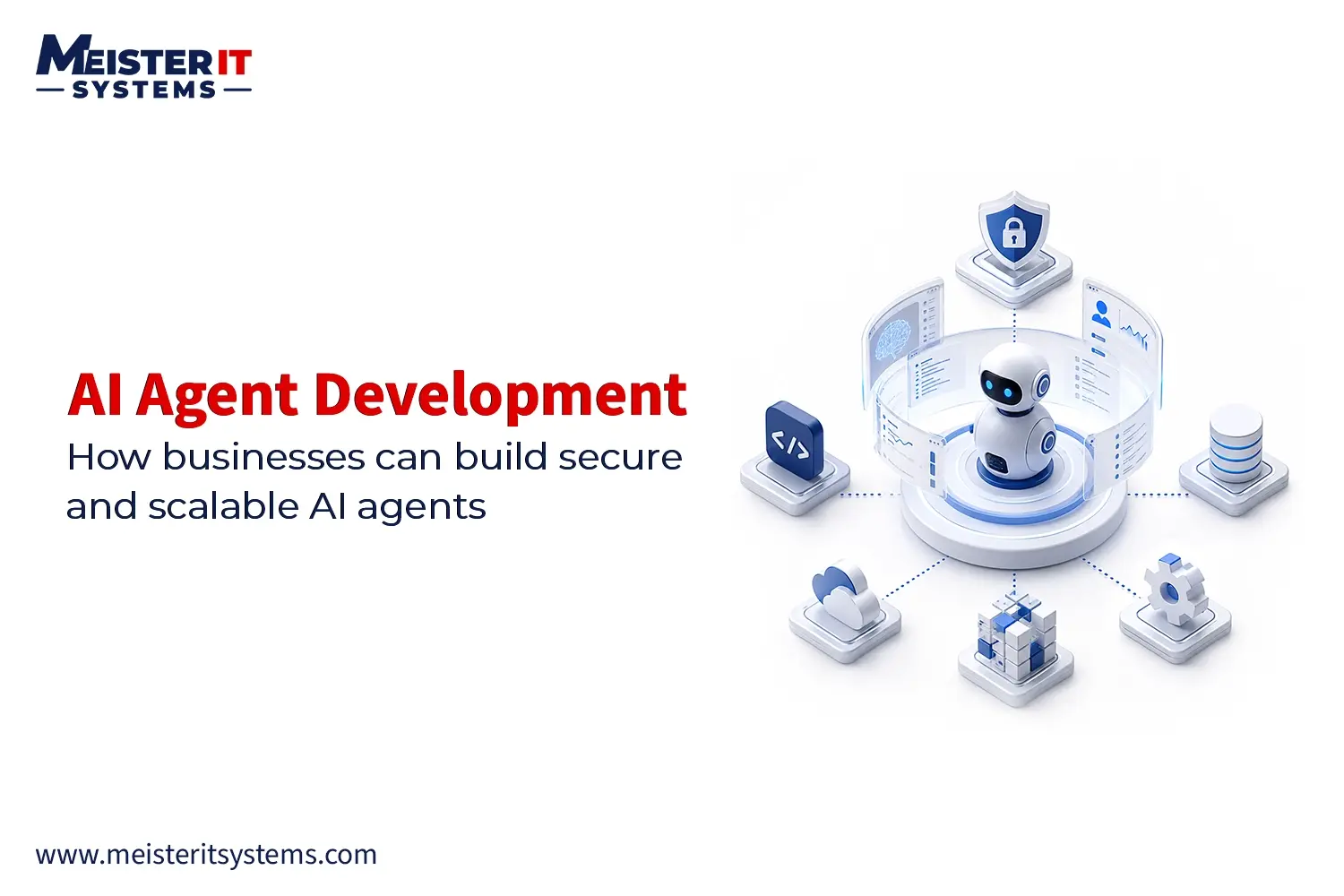
Strong AI agent permissions and least-privilege access ensure agents receive only the capabilities necessary for their intended tasks.
How to Build Human Approval Without Slowing AI Automation?
Human-in-the-loop AI should not mean asking someone to approve every agent action.
Instead, organisations can classify actions according to risk.
Tier 1: Low Risk
Allow autonomous execution for actions such as searching approved documentation, generating drafts, summarising information, and reading non-sensitive logs.
Tier 2: Moderate Risk
Allow execution within predefined limits, potentially with additional validation or notifications. This could include updating staging environments or preparing draft pull requests.
Tier 3: High Risk
Require explicit human approval for production deployments, financial transactions, sensitive database modifications, permission changes, and destructive actions.
This approach keeps routine automation moving while placing stronger controls around consequential decisions.
Apply Least-Privilege AI Agent Permissions
An AI agent should not receive broad system access simply because an integration makes those permissions available.
Each agent should operate with the minimum permissions required for its role.
For example, an infrastructure monitoring agent may need access to logs and metrics but no permission to delete cloud resources or modify security policies.
Combining least-privilege access with strong AI agent access controls reduces the potential blast radius if an agent makes an incorrect decision or its workflow is compromised.
Maintain AI Agent Audit Trails
Every consequential action performed by an AI agent should be traceable.
AI agent audit trails can capture:
- The original request
- Tools and APIs invoked
- Relevant permission decisions
- Approval requests
- Who approved the action
- Execution results
- Resulting system changes
These records help security and engineering teams investigate incidents, understand unexpected agent behaviour, and support internal governance and compliance requirements.
Auditability also creates accountability. Businesses can understand not only what an agent did, but how an action moved through the approval and execution process.
Design AI Agent Approval Gates Into the Workflow
Approval gates should be built into the architecture rather than added after an AI agent reaches production.
Consider an infrastructure agent that identifies a security configuration problem.
The workflow could be:
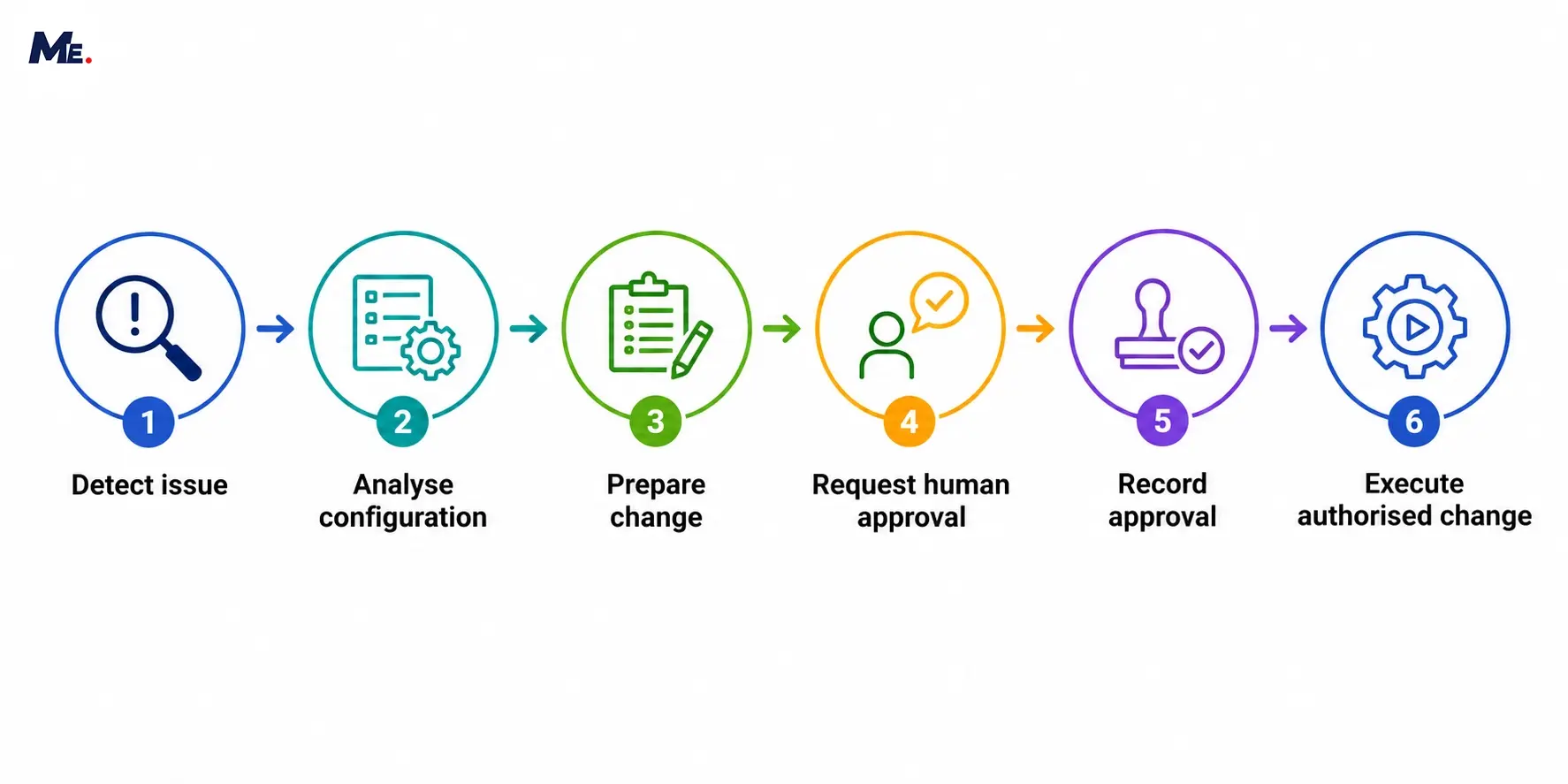
The agent handles analysis and preparation automatically. A human remains responsible for authorising the high-impact action.
This is where human-in-the-loop AI becomes practical. Automation handles repetitive work, while people retain control over decisions that carry serious operational consequences.
Conclusion
AI agents can bring significant speed and efficiency to business operations. But as their access to infrastructure, applications, customer data, and external tools increases, so does the need for stronger security boundaries.
Effective AI agent security does not mean requiring human approval for every task. It means defining where autonomous execution is appropriate and where human judgement remains essential.
Least-privilege permissions, AI agent access controls, risk-based approval gates, and comprehensive audit trails allow organisations to automate routine work while maintaining control over high-impact actions.
At MeisterIT Systems, we help businesses design and develop secure AI agents around real operational requirements. From custom AI agent development and secure API integrations to permission controls, human approval workflows, and auditability, our engineering team can help you build agentic AI systems with security built into the architecture.
Planning to integrate AI agents into your business workflows?
Contact our experts to build secure AI agents that deliver automation without giving up control over your critical systems, data, and operations.
Frequently Asked Questions
Q1: What is AI agent security?
A1: AI agent security is the practice of protecting autonomous AI systems through controlled permissions, access restrictions, approval workflows, monitoring, and audit trails.
Q2:Which AI agent actions should require human approval?
A2: Human approval should be required for high-risk actions such as production infrastructure changes, financial transactions, sensitive data modifications, production deployments, and high-privilege integrations.
Q3: What is human-in-the-loop AI?
A3: Human-in-the-loop AI combines automation with human oversight by requiring authorised users to review or approve critical actions before an AI agent executes them.
Q4: How can businesses secure autonomous AI agents?
A4: Businesses can secure autonomous AI agents by applying least-privilege access, risk-based approval gates, strong access controls, secure integrations, and comprehensive audit logging.
Q5: Can AI agents operate securely without human approval?
A5: Yes. Low-risk and reversible tasks can often run autonomously. Human approval should be prioritised for actions with significant security, financial, operational, legal, or customer impact.