
Key Takeaways
- Enterprise AI implementation combines business strategy, data, architecture, integration, security, and continuous monitoring.
- RAG, AI workflows, AI agents, and predictive models support different enterprise use cases.
- Cloud, private, on-premises, and hybrid deployment models offer different levels of scalability and data control.
- AI projects often fail because of unclear objectives, poor data, weak governance, and limited user adoption.
- Production-ready AI requires controlled testing, human oversight, measurable ROI, and ongoing optimisation.
Introduction
Enterprise AI has quickly moved from experimentation to business necessity. Organizations are using AI to automate operations, improve customer experiences, accelerate software development, detect fraud, and make better decisions. However, buying an AI tool or deploying a language model is only the beginning.
Successful enterprise AI implementation requires much more than technology. It involves aligning AI with business objectives, preparing high-quality data, integrating AI into existing systems, protecting sensitive information, and continuously monitoring performance.
This guide explains how to implement enterprise AI successfully, the common mistakes to avoid, and the best practices that help organizations turn AI into a long-term competitive advantage.
Quick Answer
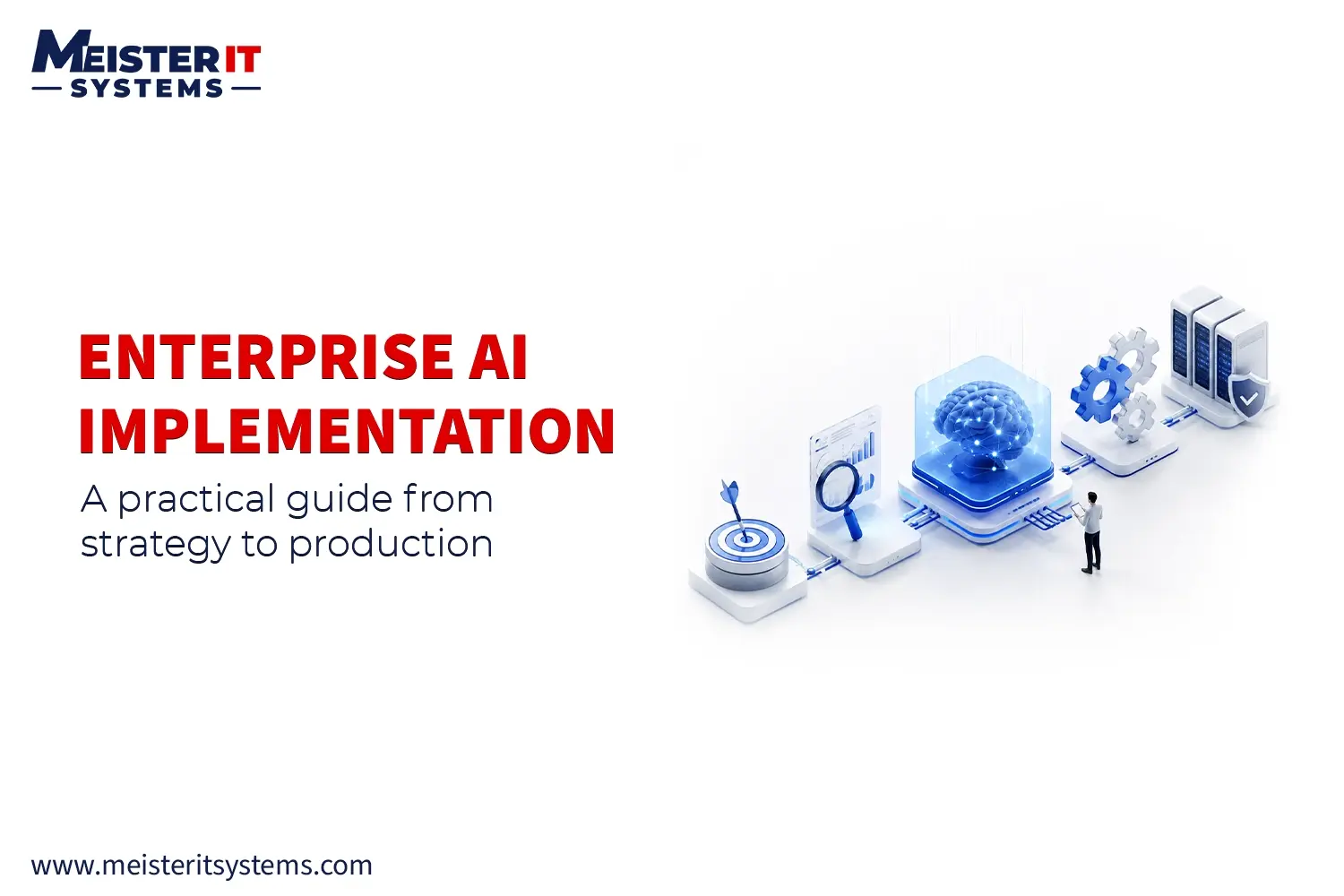
Enterprise AI implementation is the process of moving an AI use case from an initial business problem into a secure, integrated, and measurable production system. It requires clear objectives, reliable data, suitable architecture, system integration, governance, controlled testing, and continuous monitoring. The model is only one part of the complete system.
What is Enterprise AI Implementation?
Enterprise AI implementation is the process of planning, deploying, integrating, and managing artificial intelligence across an organization to solve real business problems.
Unlike consumer AI tools that help individuals write content or generate images, enterprise AI is designed to improve business operations. It connects with existing applications, works with internal business data, and supports employees in making faster, more informed decisions.
Enterprise AI can be used in almost every industry.
For example:
- A manufacturer predicts equipment failures before they happen.
- A bank detects suspicious financial transactions in real time.
- A healthcare provider summarizes patient records to reduce administrative work.
- A customer support team uses AI to answer routine questions while routing complex cases to human agents.
Enterprise AI vs Traditional Automation
Many businesses already use automation, but automation and AI are not the same.
Traditional automation follows predefined rules. Every action is based on logic that has been programmed in advance. If the conditions change, the workflow cannot adapt unless someone updates the rules.
Enterprise AI is designed to understand context, analyze information, and make recommendations based on patterns in data.
Here’s how the two stack up side by side:
| Traditional Automation | Enterprise AI |
|---|---|
| Fixed rules | Learns from data |
| Predictable outputs | Context-aware decisions |
| Limited flexibility | Adapts to new situations |
| Performs repetitive tasks |
Supports reasoning and prediction |
Why Many Enterprise AI Projects Fail
Despite growing investment in AI, many enterprise projects fail to deliver the expected results. In most cases, the problem isn’t the technology. It’s the lack of a clear implementation strategy, poor data quality, unrealistic expectations, and limited user adoption. Without the right foundation, even the most advanced AI solutions struggle to generate measurable business value.
That’s why successful organizations follow a structured implementation framework. A phased approach helps reduce risk, improve adoption, and deliver measurable business outcomes.
A Step-by-Step Enterprise AI Implementation Framework
Successful AI adoption doesn’t happen overnight. Organizations that achieve long-term success usually follow a structured implementation roadmap instead of trying to deploy AI everywhere at once.
A phased approach reduces risk, improves adoption, and allows teams to learn from early projects before expanding AI across the business.
Step 1: Define Business Objectives
Every enterprise AI project should begin with a business problem, not a technology discussion.
Ask questions like:
- Which process needs improvement?
- What outcome are we trying to achieve?
- How will success be measured?
- What is the expected return on investment?
Typical business goals include:
- Reducing manual work
- Increasing operational efficiency
- Improving customer support
- Lowering operational costs
- Increasing revenue
- Enhancing decision-making
Clear objectives provide direction for every technical decision that follows.
Step 2: Assess Your AI Readiness
Before selecting AI tools or vendors, evaluate whether your organization is ready for implementation.
Consider the following questions:
- Is your business data accurate and accessible?
- Do you have strong security controls?
- Can your existing infrastructure support AI workloads?
- Are governance policies already in place?
- Do employees have the skills needed to work with AI?
An AI readiness assessment helps identify gaps early, reducing delays later in the project.
Step 3: Prioritize High-Value Use Cases
Not every business process needs AI.
Start with projects that offer measurable business value and have a high chance of success.
Evaluate each use case based on:
- Business impact
- Data availability
- Technical feasibility
- Implementation cost
- Time to value
- Expected ROI
Many organizations begin with one or two projects before expanding AI across multiple departments.
Step 4: Build a Strong Data Foundation
Data is the backbone of every successful AI system.
Before deploying AI, organizations should establish processes for:
- Data collection
- Data cleansing
- Data validation
- Metadata management
- Access control
- Data governance
- Security and compliance
Reliable data leads to reliable AI.
Skipping this step often results in inaccurate predictions, poor recommendations, and reduced user trust.
Step 5: Select the Right AI Architecture
The right architecture depends on the use case, data sensitivity, required integrations, scalability, and budget. Organizations must choose both an AI application pattern and a deployment model.
AI Application Patterns
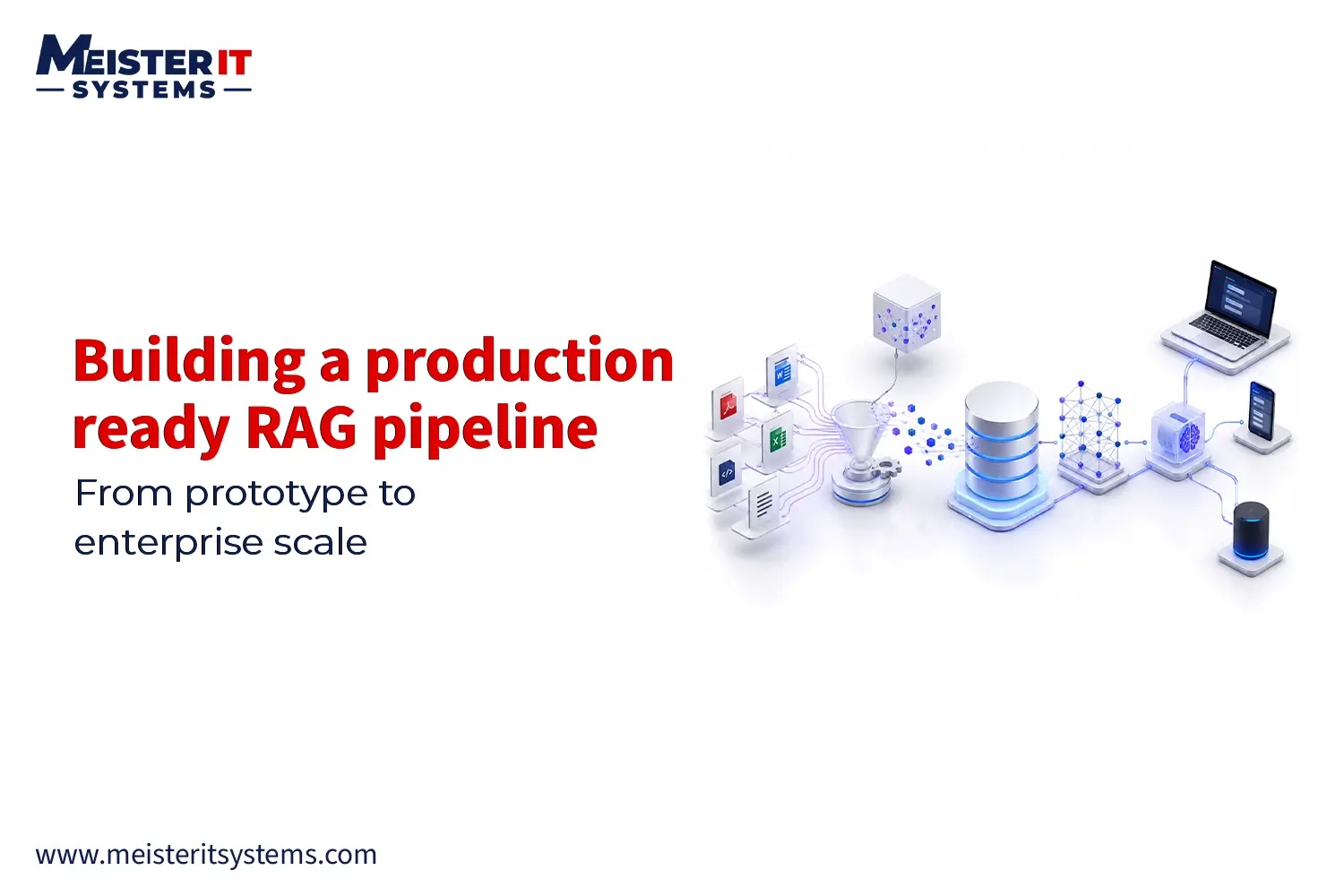
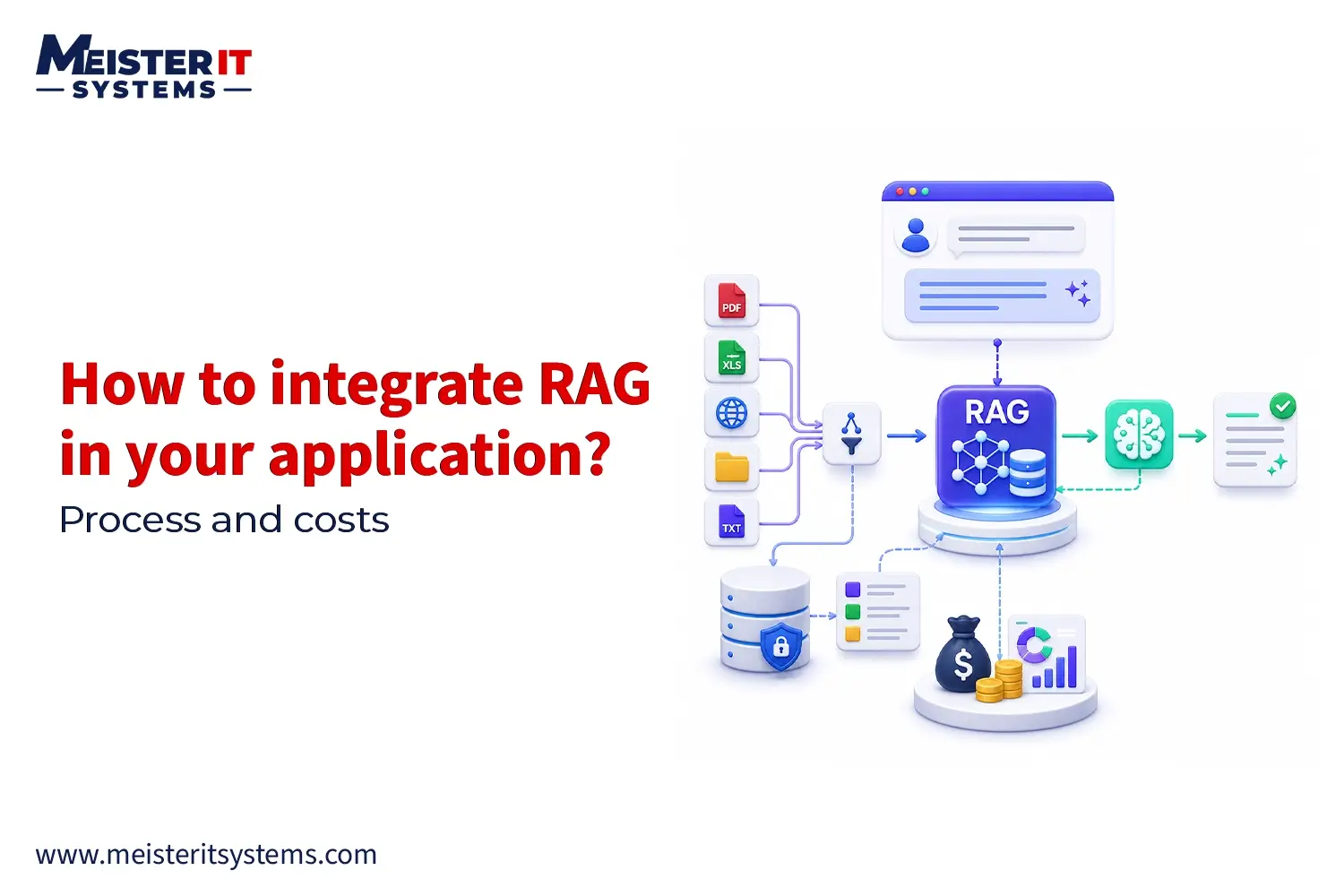
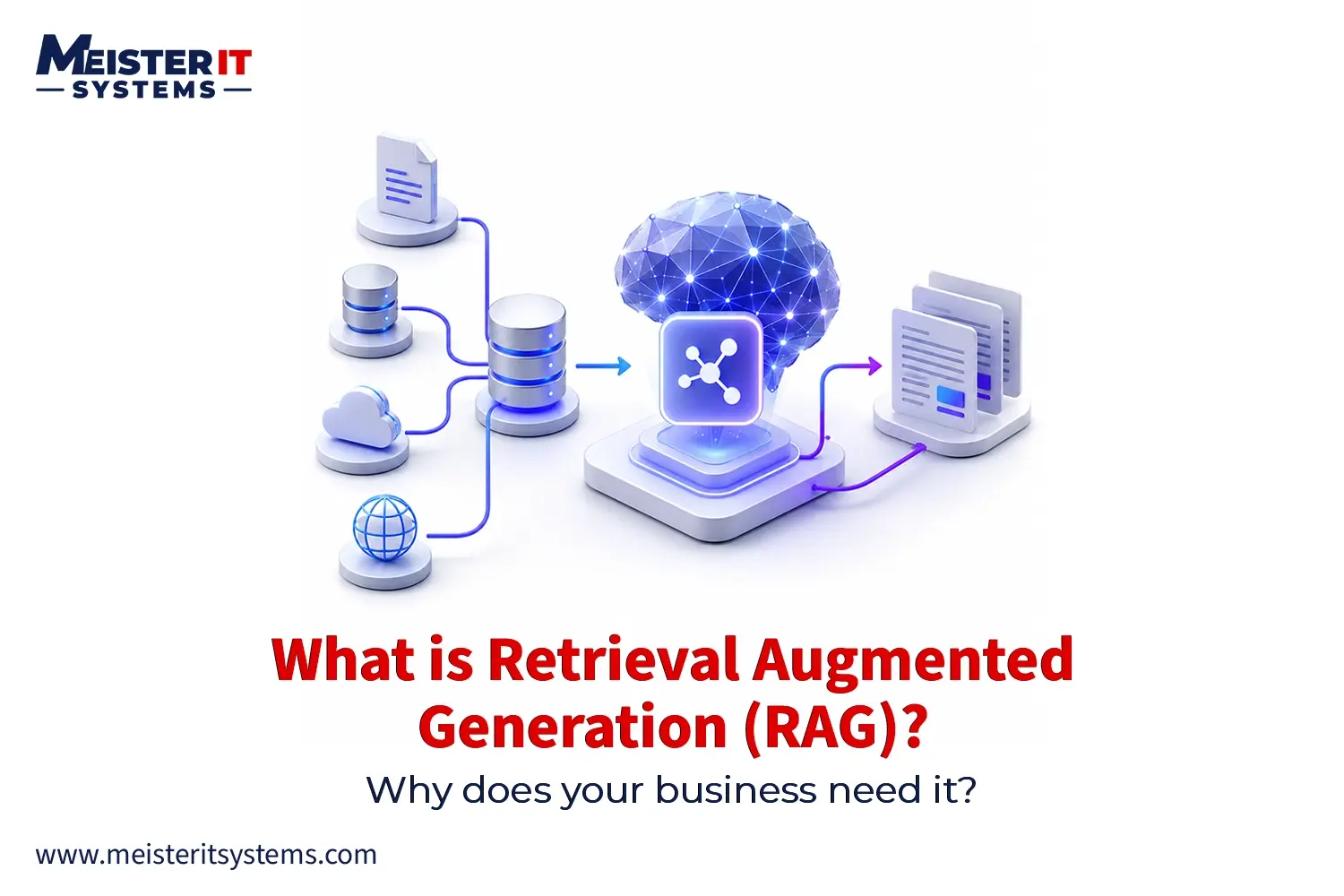
- Retrieval-Augmented Generation: Connects an AI model with approved business data. It is suitable for enterprise search, internal assistants, and customer support.
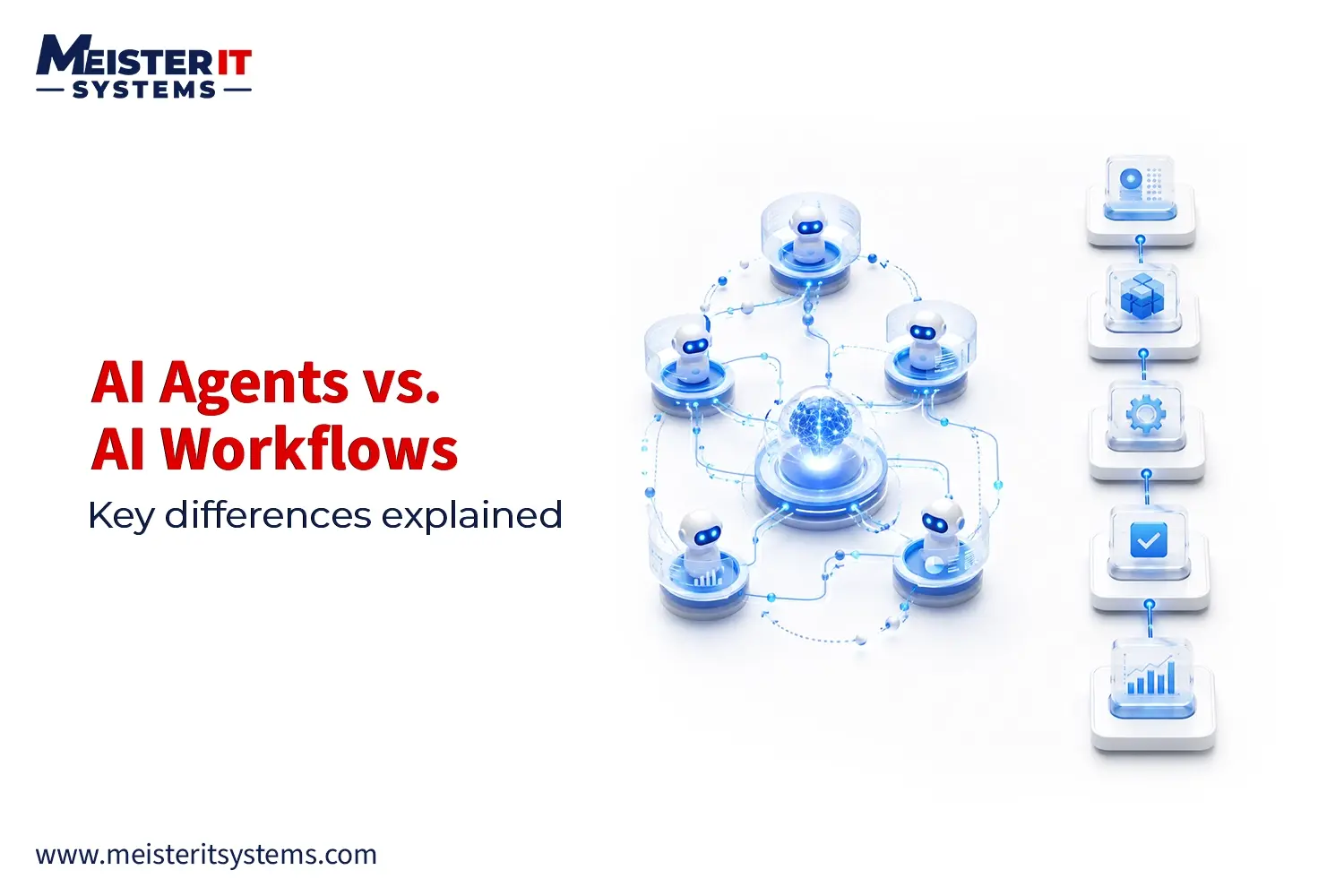
- AI workflows: Use AI within a predefined sequence. They work well for document processing, ticket routing, data extraction, and report generation.
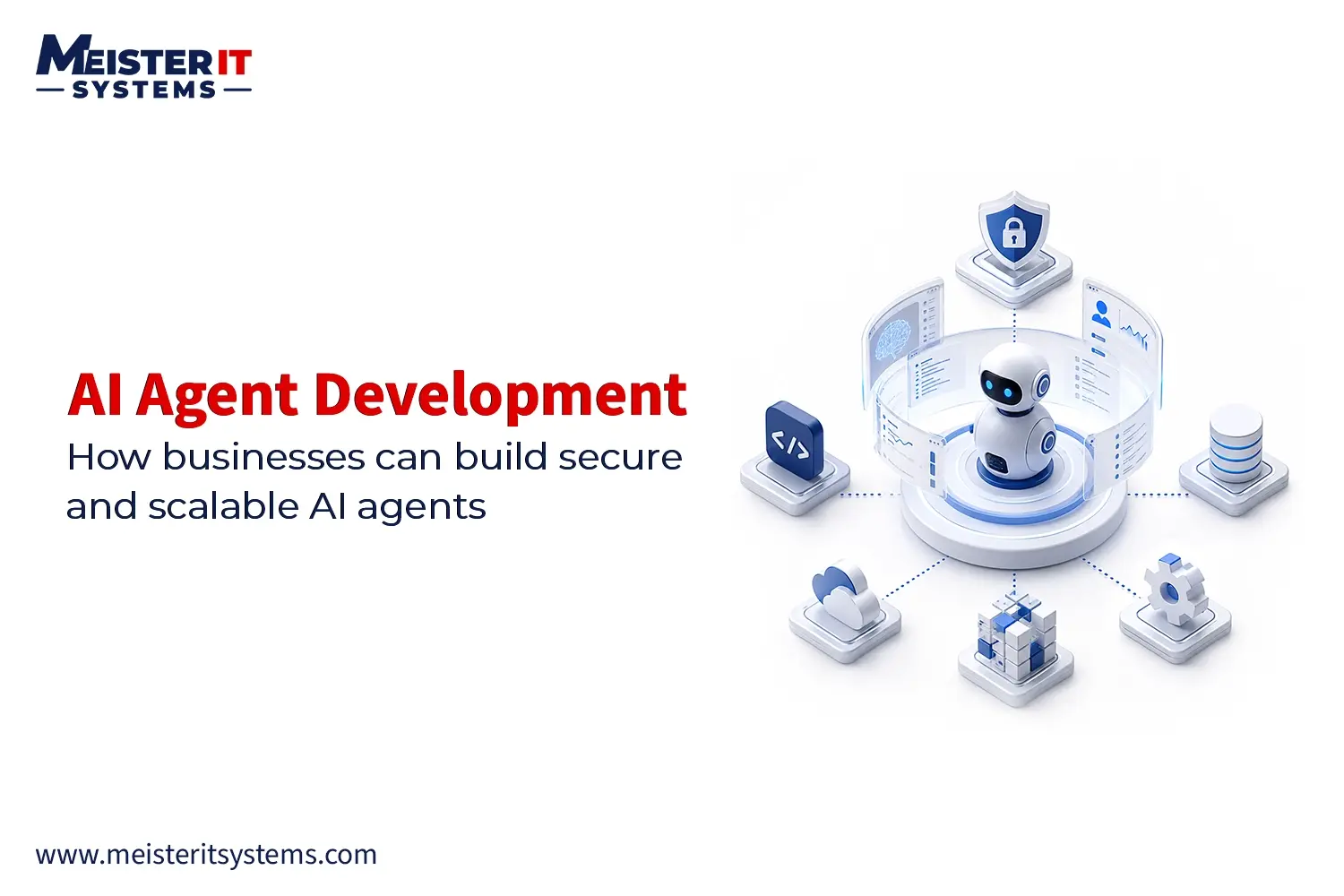
- AI agents: Plan tasks and perform actions across connected systems. They require strict permissions, audit logs, and human approval for sensitive actions.
- Predictive machine learning: Uses historical data for forecasting, fraud detection, predictive maintenance, and risk scoring.
AI Deployment Models
- Managed cloud AI: Offers faster implementation but requires careful review of data security, vendor dependency, and usage costs.
- Private cloud AI: Provides greater control over infrastructure, data, and access policies.
- On-premises AI: Supports strict data-residency requirements but requires more infrastructure and internal expertise.
- Hybrid AI: Combines cloud scalability with private control over sensitive data.
Architecture should be selected based on business and security requirements, not on the popularity of a particular AI platform.
Step 6: Integrate, Secure, Test, and Monitor
An AI model only creates value when it works safely within existing business processes.
1. Integrate With Existing System
Connect the AI solution with required CRM, ERP, databases, document repositories, APIs, web applications, and mobile applications. Clearly define what information it can access and what actions it can perform.
2. Establish Security and Governance
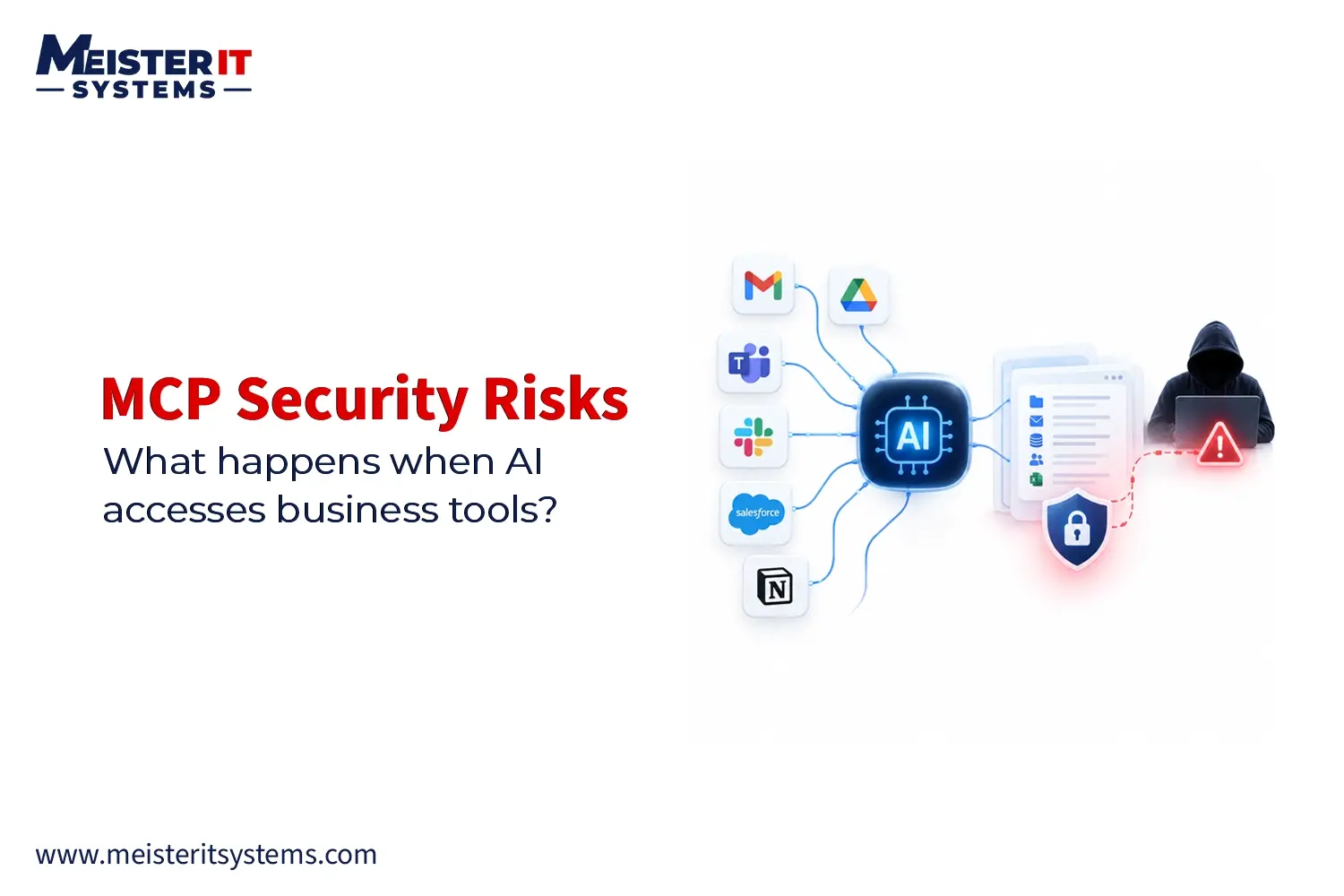
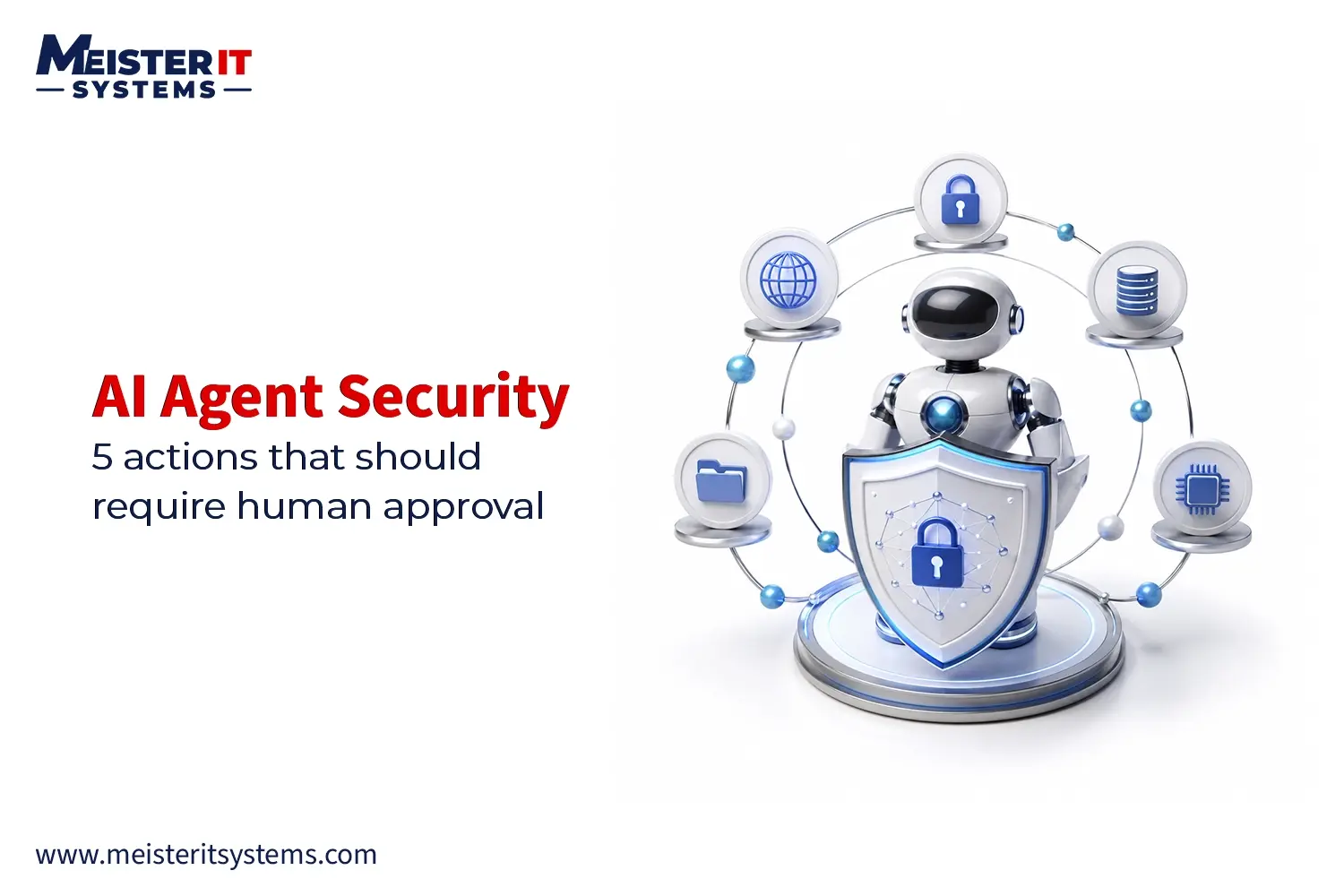
Implement role-based permissions, audit trails, sensitive data controls, prompt-injection protection, and incident response procedures. High-impact actions, including payments, account changes, and record deletion, should require human approval.
3. Run a Controlled Pilot
Test the system with a limited group before wider deployment. Measure accuracy, retrieval quality, hallucinations, latency, task-completion rate, security, user experience, and failure handling.
4. Prepare Employees and Assign Ownership
Train employees to use and review AI outputs correctly. Assign a business owner for results and a technical owner for integrations, security, performance, and maintenance.
5. Deploy and Monitor
Track technical performance, business KPIs, security incidents, user feedback, model usage, and operating costs. Review the system regularly and expand access only when it continues to meet agreed performance and risk requirements.
How to Measure Enterprise AI ROI?
Enterprise AI ROI should be measured against the process that existed before implementation. Metrics such as the number of prompts or registered users do not prove business value.
Track outcomes such as:
- Time saved per task
- Cost per completed task
- Reduction in manual work
- Error and rework rates
- Customer response time
- Employee adoption
- Revenue impact
- AI infrastructure and model costs
Record baseline performance before launching the pilot. This makes it easier to determine whether AI improved the process or added another operating cost.
Common Enterprise AI Implementation Mistakes
Even a technically capable AI system can fail without the right implementation strategy.
Common mistakes include:
- Starting without a measurable business objective
- Selecting AI because it is popular rather than necessary
- Using unreliable or incomplete data
- Giving AI excessive system permissions
- Skipping security and production testing
- Failing to define human approval points
- Ignoring employee training
- Measuring activity instead of business results
- Overlooking ongoing model and infrastructure costs
Addressing these risks early helps prevent expensive pilots that never reach production.
Enterprise AI Production-Readiness Checklist
Before deploying an AI system across the organization, confirm that:
- The use case has a clear business owner and KPI.
- Data sources are accurate, approved, and accessible.
- User and system permissions are properly defined.
- Sensitive actions require human approval.
- AI outputs and tool actions are recorded.
- Security and failure scenarios have been tested.
- Rollback and incident-response procedures are available.
- Employees understand how to use the system.
- Operating costs can be measured and controlled.
- Performance will be continuously monitored.
If these controls are missing, the organization has an AI prototype rather than a production-ready system.
Conclusion
Successful enterprise AI implementation requires more than selecting a model. It depends on a clear business objective, reliable data, suitable architecture, secure integration, controlled testing, and continuous monitoring.
Organizations that build these foundations can move beyond isolated AI experiments and create systems that improve operations, reduce costs, and support better decisions.
Move Enterprise AI From Pilot to Production
MeisterIT Systems helps businesses assess AI readiness, select suitable architectures, integrate AI with existing systems, and establish the security controls required for production deployment.
Whether you are planning your first AI use case or trying to scale an existing pilot, we can help identify the technical, data, security, and integration gaps that may block progress.
Ready to move your enterprise AI project into production?
Contact us for an AI readiness assessment.
Frequently Asked Questions
Q1: What is enterprise AI implementation?
A1: Enterprise AI implementation is the process of planning, integrating, deploying, and managing AI systems that solve business problems and improve operational performance.
Q2: How long does enterprise AI implementation take?
A2: The timeline depends on the use case, data readiness, integrations, security requirements, and project scope. A focused pilot may take several weeks or months, while organization-wide implementation requires phased deployment and continuous improvement.
Q3:What is the biggest enterprise AI implementation challenge?
A3: Poor data quality and unclear business objectives are two of the most common challenges. Complex integrations, weak governance, and limited user adoption can also prevent AI projects from reaching production.
Q4: How can businesses secure enterprise AI?
A4: Businesses should use role-based access, data encryption, audit logs, prompt-injection protection, human approvals, and continuous security monitoring. AI systems should only access the data and actions required for their approved use case.
Q5: Why work with an enterprise AI implementation partner?
An experienced implementation partner can help evaluate use cases, select the right architecture, integrate existing systems, establish security controls, and reduce the risks involved in moving from pilot to production.