Key Takeaways
- Regular AWS architecture reviews help growing SaaS companies identify infrastructure bottlenecks before they affect performance.
- Scalable compute, database, and networking configurations support increasing workloads and customer demand.
- Strong security controls, tenant isolation, and tested recovery strategies reduce infrastructure risks.
- Continuous monitoring and AWS cost optimisation help maintain reliable, efficient, and cost-effective infrastructure
Introduction
An AWS environment can work perfectly at 100 customers and still become expensive, difficult to operate, or unreliable at 10,000. A regular AWS architecture review helps growing SaaS companies identify scalability bottlenecks, security gaps, reliability risks, and unnecessary infrastructure costs before they affect customers.
As the application grows, the underlying architecture needs to grow with it.Our guide to building a scalable SaaS application covers the application-level decisions that support long-term growth. This article focuses on the AWS infrastructure behind that application, covering compute, databases, networking, security, reliability, observability, and cost optimization.
Why Growing SaaS Companies Need an AWS Architecture Review
Growth changes infrastructure requirements. More customers mean more requests, larger datasets, higher background-processing loads, and greater variation in tenant behavior.
An architecture review should therefore look beyond whether the application is currently working. It should examine whether the underlying AWS SaaS architecture can continue to handle growth without creating excessive cost or operational risk.
AWS’s Well-Architected Framework evaluates workloads across six pillars: operational excellence, security, reliability, performance efficiency, cost optimization, and sustainability. The AWS SaaS Lens adds SaaS-specific concerns such as tenant isolation, tenant activity, data partitioning, noisy neighbors, and tenant-aware operations.
What Should an AWS Architecture Review Cover?
A practical AWS infrastructure checklist should cover:
- Application architecture and dependencies
- Compute and auto scaling
- Database performance and capacity
- Networking and traffic flow
- Security and access controls
- Reliability and disaster recovery
- Monitoring and observability
- AWS cost optimization
- Multi-tenant SaaS requirements
The goal is not to replace working infrastructure with something more complicated. It is to identify where the current architecture may become a constraint as the business grows.
1. Review Your Application Architecture
Start with the application itself.
A scalable AWS architecture depends on how the application handles requests, background jobs, dependencies, and failures. Review whether services have clear responsibilities and whether critical workloads are unnecessarily coupled.
For SaaS products, also examine whether the architecture can scale different workloads independently.
Key checks:
- Are application dependencies documented?
- Are major scaling bottlenecks known?
- Can background processing run independently from user requests?
- Are service boundaries clear?
- Does the architecture introduce unnecessary operational complexity?
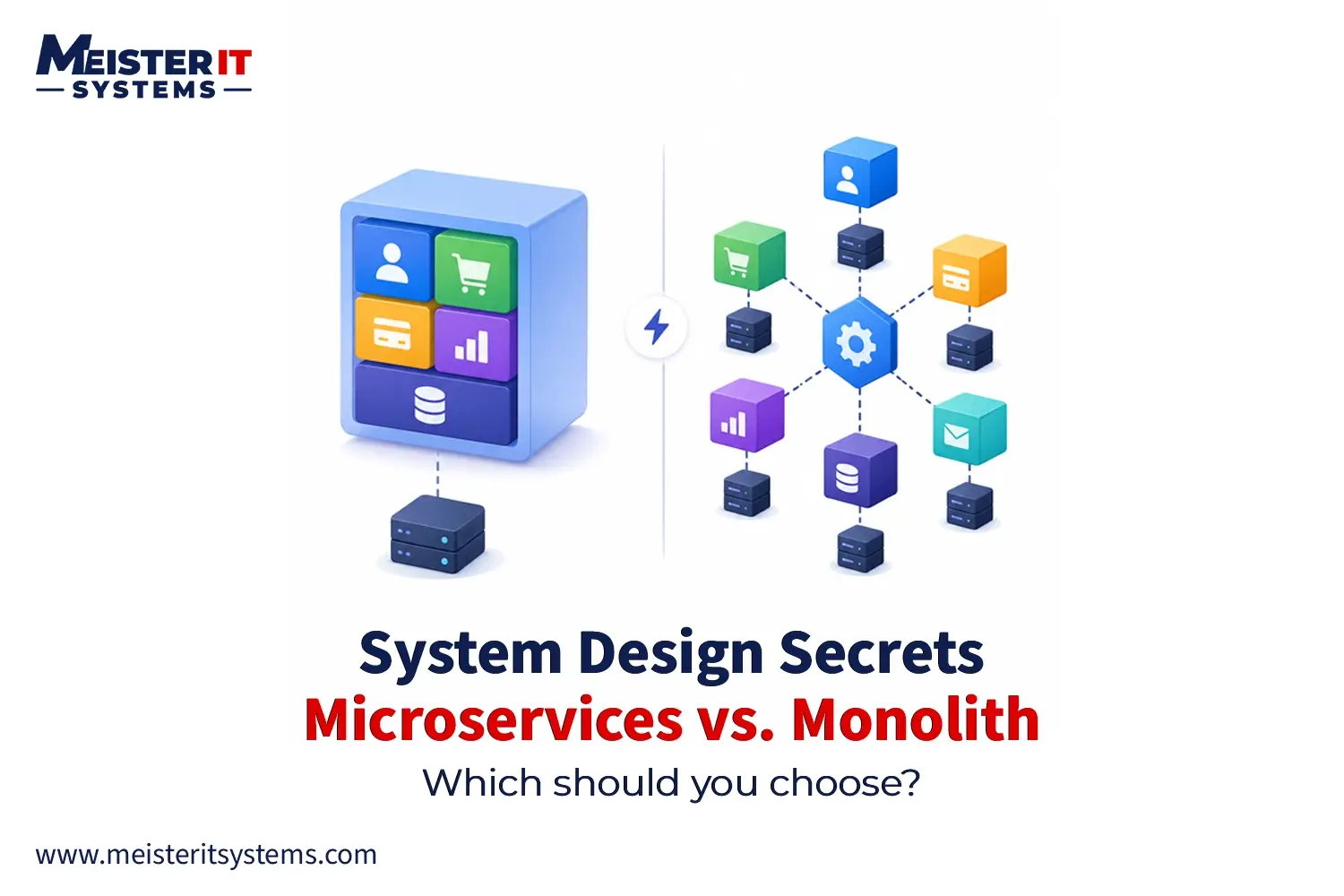
A growing SaaS product does not automatically need microservices. In some cases, a modular monolith can remain easier and cheaper to operate.
For a deeper comparison, see our guide to microservices vs. monolithic architecture.
2. Review Compute and Auto Scaling
Compute resources should match actual workload requirements rather than historical assumptions.
Review EC2, ECS, EKS, Lambda, load balancers, and Auto Scaling configurations based on real traffic patterns. Look at both normal usage and sudden increases in demand.
Key checks:
- Are compute resources appropriately sized?
- Is auto scaling configured for important workloads?
- Are scaling thresholds based on meaningful metrics?
- Can the system handle peak traffic without manual intervention?
- Is any critical workload dependent on a single instance?
Performance reviews should be data-driven. AWS recommends continuously reviewing architecture choices and monitoring performance rather than treating infrastructure decisions as permanent.
For workloads that fit a serverless model, our guide to AWS serverless architecture explains how Lambda and API Gateway can be used to build and deploy APIs.
3. Review Database Architecture
Database limitations can become one of the biggest constraints as a SaaS platform grows.
Review the database engine, workload patterns, connection management, indexes, storage, read/write distribution, backups, and failover strategy.
For AWS environments using services such as RDS, Aurora, or DynamoDB, check whether the current configuration matches expected data and traffic growth.
Key checks:
- Are slow queries monitored?
- Are database connections managed efficiently?
- Is read traffic separated where appropriate?
- Are backups regularly tested?
- Is database capacity monitored?
- Can the database recover from a failure within the required RTO and RPO?
Database scaling should be based on actual workload characteristics, not simply on increasing instance size whenever performance drops.
4. Review Networking and Traffic Flow
As infrastructure grows, network architecture becomes harder to reason about.
Review the flow between users, load balancers, APIs, application services, databases, storage, and external systems.
Check:
- VPC and subnet design
- Public and private resources
- Security groups
- Load balancers
- API Gateway
- CloudFront
- NAT Gateway usage
- DNS and routing
The objective is to understand how traffic moves through the AWS infrastructure and where failures or unnecessary costs could occur.
5. Review AWS Security Controls
Security should be reviewed as part of the architecture, not added after the infrastructure is built.
Focus on IAM, least-privilege access, encryption, secrets, network controls, logging, and administrative access.
For SaaS platforms, tenant isolation deserves particular attention. AWS identifies preventing cross-tenant access as a foundational SaaS security requirement because a failure in tenant isolation can expose one customer’s resources to another.
Key checks:
- Are IAM permissions based on least privilege?
- Are unused credentials removed?
- Are application secrets protected?
- Is sensitive data encrypted?
- Is administrative access controlled?
- Are security events logged and reviewed?
6. Review Reliability and Disaster Recovery
A production architecture should define what happens when components fail.
Review availability zones, backups, health checks, failover mechanisms, recovery procedures, and dependencies on external services.
Key checks:
- Are critical workloads distributed across appropriate failure boundaries?
- Are backups tested rather than simply configured?
- Are RTO and RPO defined?
- Has a failover been tested?
- the team recover critical services without relying on undocumented knowledge?
For SaaS, reliability testing should also consider different tenant workloads. AWS specifically recommends testing tenant consumption, workflows, API throttling, data distribution, onboarding, and tenant isolation.
7. Review Monitoring and Observability
An architecture can be technically scalable and still be difficult to operate if the team cannot see what is happening in production. AWS observability should give your team enough visibility to identify performance issues, failures, and capacity problems before they affect customers.
Review CloudWatch metrics, application logs, distributed tracing, error rates, latency, and alerting across critical services.
Key checks:
- Are critical services monitored?
- Are important errors generating alerts?
- Are application and infrastructure logs centralized?
- Are latency and error rates tracked?
- Can the team trace failures across services?
- Are alerts actionable rather than excessive?
For growing SaaS platforms, monitoring should also provide visibility into tenant activity and resource consumption. AWS recommends tenant-aware metrics because aggregate metrics can hide problems affecting individual customers.
8. Review AWS Cost Optimization
AWS costs can increase quickly when infrastructure grows without regular review. A larger bill does not always mean the platform is handling more valuable workloads.
An AWS architecture review should therefore include cost alongside performance and reliability.
Review:
- EC2 and container utilization
- RDS and database capacity
- Storage growth
- Data transfer
- NAT Gateway usage
- Idle resources
- Non-production environments
- Reserved capacity and Savings Plans
- Cost allocation by workload or tenant
Key checks:
- Are compute resources right-sized?
- Are idle resources being removed?
- Are storage lifecycle policies being used where appropriate?
- Are data transfer costs understood?
- Can infrastructure costs be attributed to major workloads?
- Are development and staging environments controlled?
For a deeper review of this area, see our guide to AWS cloud cost optimization.
9. Review SaaS-Specific Architecture
A SaaS platform has architectural requirements that a conventional application may not.
As customer numbers increase, the review should examine multi-tenancy, tenant isolation, noisy neighbors, tenant-level usage, and data growth.
AWS’s SaaS guidance emphasizes that tenant isolation should be deliberately designed rather than assumed from the underlying infrastructure.
Key checks:
- Is tenant data properly isolated?
- Can one tenant’s workload affect others?
- Can tenant-level usage be measured?
- Are high-usage tenants identified?
- Can infrastructure scale with customer growth?
- Are tenant onboarding and provisioning processes repeatable?
- Can customer-specific performance issues be investigated?
For example, a platform may have enough overall compute capacity but still experience problems because one high-volume customer consumes a disproportionate share of database connections, API requests, or background-processing capacity.
This is why AWS architecture for growing SaaS companies needs to consider both platform-level capacity and tenant-level behavior.
10. Review Event-Driven Workloads
Growing SaaS platforms often move long-running or non-critical tasks away from synchronous request paths.
- Background jobs
- Message retries
- Dead-letter queues
- Event routing
- Duplicate processing
- Failure handling
- Message visibility and monitoring
Key checks:
- Can failed messages be retried safely?
- Are dead-letter queues configured where required?
- Is duplicate processing handled?
- Can important events be traced?
- Are asynchronous workloads monitored?
See our guide to AWS SQS vs. SNS vs. EventBridge for a deeper comparison.
11. Complete AWS Architecture Review Checklist
Use this checklist as a starting point for a production review:
| Area | Review |
|---|---|
| Architecture | Dependencies, service boundaries, scaling bottlenecks |
| Compute | Right-sizing, auto scaling, capacity |
| Database | Performance, connections, backups, failover |
| Networking | Traffic flow, subnets, load balancing, exposure |
| Security | IAM, encryption, secrets, tenant isolation |
| Reliability | Redundancy, RTO, RPO, recovery testing |
| Observability | Logs, metrics, tracing, alerts |
| Cost | Idle resources, utilization, storage, data transfer |
| SaaS | Tenants, noisy neighbors, usage, data growth |
| Events | Queues, retries, dead-letter handling |
When Should You Review Your AWS Architecture?
An architecture review does not need to happen only when something breaks.
Consider reviewing the infrastructure when:
- Customer numbers are growing rapidly
- AWS spending is increasing unexpectedly
- Traffic patterns have changed significantly
- Database performance is declining
- New regions or major features are being introduced
- Infrastructure has grown without clear documentation
- Disaster recovery has never been tested
- Security permissions have become difficult to manage
- The team is adding infrastructure faster than it can maintain it
A review is particularly useful before a major growth phase, migration, product launch, or architectural change.
How MeisterIT Systems Can Help
Growing SaaS companies need infrastructure that can scale without creating unnecessary cost, security exposure, or operational complexity.
MeisterIT Systems helps businesses assess AWS infrastructure, identify architecture and scalability gaps, optimize cloud environments, and improve the reliability and security of production systems.
Our work can cover:
- AWS architecture assessment
- Cloud infrastructure optimization
- DevOps and CI/CD
- Security and access controls
- Monitoring and maintenance
- SaaS scalability planning
Conclusion
AWS architecture should be reviewed as the business grows, not only after infrastructure becomes a problem.
A structured AWS architecture review checklist helps technical teams assess scalability, security, reliability, observability, and cloud costs. For SaaS companies, the review should also consider tenant isolation, workload distribution, customer growth, and infrastructure efficiency.
The goal is not to make your AWS environment more complicated. It is to make sure your infrastructure can support the next stage of growth without creating unnecessary cost or operational risk.
Need an AWS Architecture Review?
Growing SaaS companies need infrastructure that can scale without creating unnecessary cost, security exposure, or operational complexity.
MeisterIT Systems can assess your AWS architecture, identify scalability and security gaps, optimize cloud infrastructure, and help your team prepare for the next stage of growth.